

D.GRAY-MAN
STATUS
COMPLETE
EPISODES
103
RELEASE
September 30, 2008
LENGTH
23 min
DESCRIPTION
Towards the end of the 19th century, Allen Walker officially joins the organization of Exorcists that destroy the beings known as Akuma; mechanic weapons made by the Millennium Earl with the suffering souls of the dead. Allen has both a cursed eye and an anti-Akuma weapon as an arm, bearing the power of "Innocence", a gift given to him as an apostle of God. Allen, along with his fellow Exorcists must put a stop to the Millennium Earl's ultimate plot that could lead to the destruction of the world and all who live on it.
CAST

Allen Walker

Sanae Kobayashi

Lavi

Kenichi Suzumura

Yuu Kanda

Takahiro Sakurai

Lenalee Lee

Shizuka Itou

Tyki Mikk

Toshiyuki Morikawa

Road Kamelot

Ai Shimizu
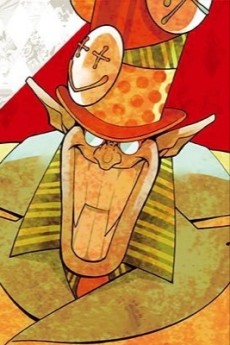
Sennen Hakushaku

Junpei Takiguchi
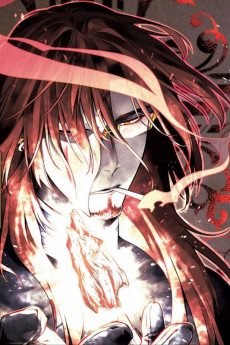
Cross Marian

Hiroki Touchi

Miranda Lotto

Megumi Toyoguchi

Arystar Krory III

Mitsuo Iwata

Komui Lee

Katsuyuki Konishi

Howard Link

Daisuke Kishio
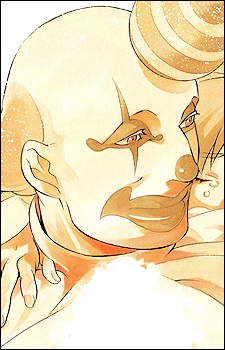
Mana Walker

Fumihiko Tachiki

Bak Chang

Shinichirou Miki

Fou

Miina Tominaga

Debitto

Mitsuki Saiga

Jasdero

Shoutarou Morikubo

Lero
Shizuka Itou

Lulu Bell

Arisa Ogasawara
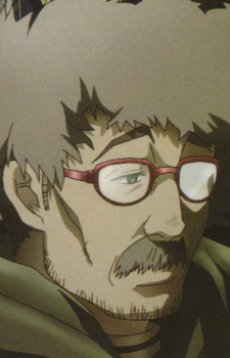
Froi Tiedoll

Takaya Hashi
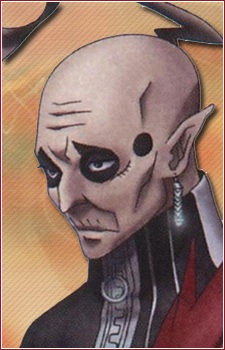
Bookman

Takeshi Aono

Klaud Nine

Masako Katsuki
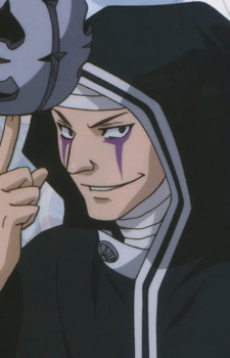
Daisya Barry

Hiroshi Yanaka

Johnny Gill

Tomohiro Tsuboi

Reever Wenhamm

Ryoutarou Okiayu
EPISODES
Dubbed
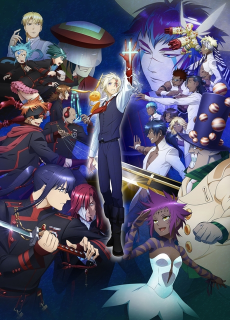
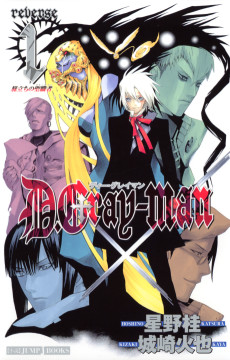
RELATED TO D.GRAY-MAN

REVIEWS

Edison
DGM is a brilliant story that balances all of the essential aspects of an anime show extremely well.Continue on AniListHey, you! Are you looking for a dark fantasy show that also happens to be an amazing shounen? And has a cast filled with complex and incredibly interesting characters? Then it is your lucky day today because D.Gray-man fits this description perfectly! 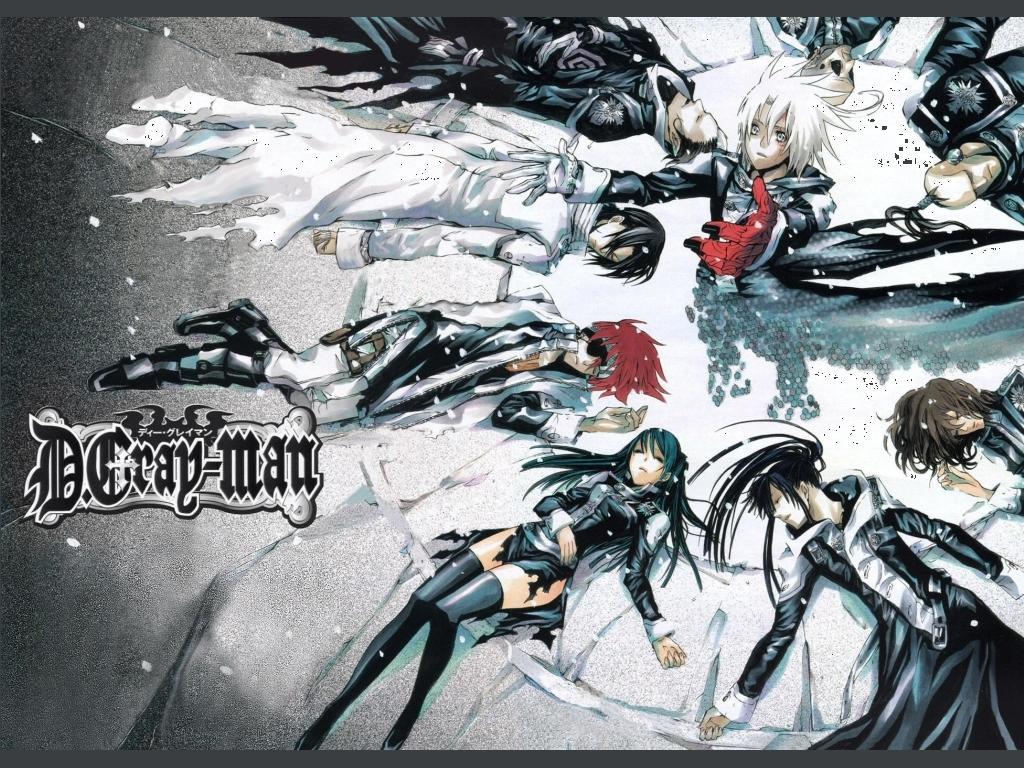
This anime introduces us to an alternative 19th century and follows the journey of Allen Walker, a young exorcist, who joins an organization called Black Order to fight alongside other exorcists. The exorcists aren’t ordinary people, therefore they are the ones who can use Innocence, an ancient essence to battle the Millennium Earl and his creations called Akuma who are ready to do anything to destroy humanity. Although the plot might sound very generic, let me assure you that the title gets dark really quick since it raises such heavy topics as what it takes to be human, the pain and agony of inner conflict, and who/what people (and others) care about.
# __STORY__ As I said above, the plot does indeed sound basic but the way this anime explores the narrative is very engaging and makes you question many things, not only about the world within that show but also outside of it. DGM narrative challenges and encourages you to think about your own life, your priorities; it provokes you to think critically about who is important to you, who you care about, and what you care about in the show/real life. How does it do it? It’s pretty simple! Throughout the story, we get to follow Allen, and since it is “expected” or “natural” for us to attach to him because he’s the main character, together with him we go through this incredible emotional journey where we see him during the ups and downs which are usually major plot points. Not only that but we also get to see other main and side characters go through these hardships because of how the story continues to grow and becomes darker and darker with each episode. Talking about the episodes, DGM has 103 episodes, ⅕ of which are fillers but the fillers are pretty good because they explore the side characters, they give them that screen time they deserve, and it leads to us getting involved with the story even more. Moreover, it just adds to the overall narrative and supports the world building of this alternative 19th century where everyone is in danger and you don’t know who you can trust. Additionally, we don’t only see the good guys' stories and struggles during the show. We get to see the evil guys’ story too! We don’t get to know every single detail about them but thanks to the incredible narration and all of the twists, all of the battles, all of the story, the viewers, us, get attached to the bad guys too.
Overall, D.Gray-man starts with what seems to be a simple conflict between good and evil and then expands its story at an incredible but very comfortable speed. It demonstrates that sometimes good and evil, white and black, get mixed and what we get is this scary and eerie ‘grey’ uncertainty in our hearts. The pacing isn’t too fast or too slow, it is perfectly balanced, just as all things should be. The plot gets more and more complex and none of the episodes, including fillers, feel to be out of place. Each time we are introduced to new characters, there is a clear reason behind them and they all have significance for the overall title. For example, a number of them are shown to emotionally involve us, the viewers, more into the story, some of them are there for the story's development sake while others serve a clear purpose of exploring the main/side characters further.
#__WORLD BUILDING__ When it comes to world building, DGM does it elegantly, swiftly, and clearly by introducing basic laws and rules right off the bat. From the first couple of episodes, we already know that there are people called exorcists who are chosen by God and can wield Innocence in different shapes and forms. These people, exorcists, obey the Black Order, which is a secret organization. To help exorcists fight, the organization has multiple locations all over the world, scientific departments, and people called finders who assist the exorcists in various ways. We also get to know to some extent how the other side of the conflict works during the very first episode. For example, we find out that Akuma is made by the Millenium Earl, and the exorcists’ goal is to defeat him to eradicate evil from the world. By adding these simple but solid concepts, the world begins to grow around you and completely immerses us in its narrative. These notions also play as dominant factors when it comes to major plot points, specifically the Akuma and the Black Order.
Along with the rules, we can also see the religious influence within the show that adds to the anime’s charm. The important thing to mention is, although we notice mentions about God, Old Testament, Noah, and many other similar things, that the conflict itself is not necessarily about religion itself. By expanding on these universe rules and fundamentals, DGM manages to build an incredible world that supports the story making it richer, thicker, and overall more exciting for the viewer. However, it should be noted that with each episode we are going deeper and deeper into the core, the heart of the series, which means we become accompanied by many unanswered mysteries. Although we encounter a good bunch of them, they aren’t imposed by force. Rather, they feel normal and natural.
#__CHARACTERS__ I could write you a whole college thesis-sized paper regarding DGM characters but for the sake of being short, I’ll try my best to be very concise and speak generally about everyone.
Let me assure you, everybody in this show has a personality. Not only do they have personalities but they also don’t feel one-dimensional throughout the entire series. Despite this show being somewhat on the longer side of the spectrum, we barely or, rather, never get tired from the characters that appear on the screen. They can be a good person or a bad person, it does not matter, we still are interested in them or connected to them in one way or another. Their personalities are unique and special. I dare to say that DGM has one of the most natural and realistic cast of characters when it comes to their nature, identities, and individuality in comparison to other shounen series.As the anime goes on, we are introduced to many important characters that either become main or side ones. As I mentioned above, thanks to the fillers (no sarcasm) we get to explore their true nature a bit more by seeing them engage with their world, people around them, and the overall story. While we are talking about character development, I’d like to mention that yes, my dear reader, it does exist in DGM! Okay, the next bit will sound super subjective but bear with me! Allen Walker, the main character, is explored throughout the whole show for obvious reasons. Lavi, for instance, hits major character development “spot” closer to the late middle-end of the series but we get the start for it way earlier than the end of the show. Lenalee’s crucial character building is divided into multiple parts and is set in different parts of the series. I believe that this sort of “strategy”
(I am not saying it exists, it’s just how I interpreted the show!)is a very cool way of exploring multiple characters without overwhelming and distracting the viewers from important plot twists and/or plot points that are not necessarily character-driven.
#__VISUALS AND AUDIO a.k.a the-part-i-suck-at__ As with my other reviews, I would like to be honest and mention my artistic abilities which are incredibly low and that is why I prefer to focus on other things other than visuals/audio
(and that's why I didn't mention character design). However, I also would like to say that DGM was made back in 2006, so please expect some clunky animation and the gradient background with white/black lines to show action, speed, attack, and other things (but it does get slightly better by the end, I promise). This is probably the only thing that didn’t age that well when it comes to the show. Despite that, the openings do contain spoilers for the arcs, so please be careful when you are searching them up! Regardless, if you can overlook these flaws, you will have an amazing and amusing time watching all 103 episodes.The audio on the other hand is truly incredible. Every single OST used was beautifully composed. There is this one specific tune that is played closer to the end of the series, and you will definitely fall in love with it, trust me. Every single opening and ending song is astonishing and, how the kids nowadays say, they all bop and go hard.
#__TLDR;__ D.Gray-man is a brilliant dark fantasy story that balances all of the essential aspects of an anime show extremely well.
Overall, D.Gray-man starts with what seems to be a simple conflict between good and evil and then expands its story at an incredible but very comfortable speed. It demonstrates that sometimes good and evil, white and black, get mixed and what we get is this scary and eerie ‘grey’ uncertainty in our hearts. By expanding on the universe's rules and fundamentals, DGM manages to build an incredible world that supports the story making it richer, thicker, and overall more exciting for the viewer. DGM has one of the most natural and realistic cast of characters when it comes to their nature, identities, and individuality in comparison to other shounen series. This show follows a cool “strategy” that happens to be a very cool way of exploring multiple characters without overwhelming and distracting the viewers from important plot twists and/or plot points that are not necessarily character-driven.If you can overlook artistic flaws and “old” shounen art style, you will have an amazing and amusing time watching all 103 episodes. The openings do contain spoilers for the arcs, so please be careful when you are searching them up! The audio is truly incredible. Every single OST used was beautifully composed. Every single opening and ending song is astonishing and, how the kids nowadays say, they all bop and go hard.
#__CONCLUSION__ I understand how some people may rate this show anywhere between 6-10 due to its flaws and shortcomings but DGM does truly deserve a watch
and love, if not more (as of March 2021, I re-watched these series 4 times). If you are looking for a less stressed and more laid back show, there is a high chance of you getting overwhelmed and dropping this title because it does get very serious very quick. If you like shounen that twists your brain and makes you question things about the show and yourself, then DGM is for you.
#__Thank you for reading!__ ## This review is dedicated to @An1meDweeb. ### Thank you for inspiring me and being my review coach! 

NordySandwich
D.GRAY-MAN--->AN UNDERRATED CLASSIC!!Continue on AniListI remember the first time I started D.Gray-man, I wasn’t exactly excited.
I had just finished a couple of high-energy series—fast fights, dramatic transformations, constant plot twists. So when I clicked play on D.Gray-man, I expected something explosive right from episode one.
Instead, what I got… felt slow.
Don’t get me wrong—the gothic aesthetic was cool. The creepy churches, foggy towns, and cursed machinery had a vibe I liked. But the pacing? It dragged for me. Episodes followed a similar pattern: Allen arrives somewhere, an Akuma appears, someone has a tragic backstory, boom—fight, purification, goodbye. Repeat.
I kept thinking, Okay, when does it really start?
At that time, I didn’t know much about the creator, Katsura Hoshino, or how much worldbuilding she was setting up. I was just watching casually. And casually, it felt formulaic.
Allen Walker himself didn’t immediately hook me either. He was polite. Kind. Soft-spoken. Strong, sure—but emotionally restrained. I was used to loud, fiery protagonists. Allen just calmly said things like “I will save both the human and the Akuma,” and moved on.
I respected him… but I didn’t feel attached.
Then there were the early Black Order missions. Lenalee kicks. Kanda scowls. Lavi jokes. Komui drinks coffee and creates chaos. It was entertaining, but not gripping. I watched because I had started it, not because I couldn’t stop.
And then I hit what people call the Fallen Angel arc.
That’s when everything changed.
The atmosphere shifted first.
It wasn’t just missions anymore. It felt heavier. The stakes weren’t just about purifying random Akuma—they were about the system itself. The Black Order didn’t feel purely heroic anymore. The Exorcists weren’t just warriors of justice; they were weapons.
And Allen?
Allen started to crack.
That was the first time I leaned forward instead of leaning back.
The Earl wasn’t just some cartoon villain sending monsters. He became terrifying in a quiet way. The concept of turning grief into weapons hit differently. The idea that love and loss could be twisted so easily made the world darker than I had realized.
I remember thinking, Wait… this is actually deep.
The arc felt less episodic and more interconnected. Characters weren’t just side figures in mini tragedies anymore—they were part of something bigger. The innocence system, the mystery behind the Noah, the political tension within the Order—it all began weaving together.
And Allen’s internal struggle became visible.
Up until then, he was composed. But during this arc, you could see that smile strain. His “I’ll save everyone” mindset didn’t feel naïve anymore—it felt painful. Like he was forcing himself to carry something too heavy.
That’s when I stopped multitasking while watching.
That’s when I started paying attention to dialogue.
That’s when I realized I might have misjudged the entire show.
But I still didn’t call myself a fan.
I finished that part thinking, Okay, that was actually good.
Not amazing.
Not life-changing.
Just good.
Then I moved on to other anime.
Months passed.
And strangely, scenes from D.Gray-man kept replaying in my head.
Not the fights.
The quiet moments.
Allen sitting alone.
Lenalee talking about protecting her world.
The eerie smile of the Earl.
The slow burn of something bigger lurking beneath the surface.
It bothered me.
Why was I still thinking about a show I thought was mid?
So one evening, bored and scrolling through my watch history, I decided to rewatch it. Not because I loved it.
But because I wanted to confirm my opinion.
The second watch felt completely different.
From episode one.
This time, I wasn’t waiting for it to “get good.” I knew where it was going. And because of that, I noticed the details.
The foreshadowing was everywhere.
Allen’s curse. The hints about the Noah. The moral ambiguity. The emotional manipulation behind every Akuma creation.
What felt repetitive before now felt intentional. Each early mission wasn’t filler—it was reinforcing a theme: grief exploited. Humanity weaponized.
And Allen? I understood him more.
He wasn’t bland. He was restrained because he had already suffered. His calmness wasn’t lack of personality—it was coping.
When he smiles, it’s not because everything’s okay. It’s because he refuses to collapse.
And that hit harder on a rewatch.
By the time I reached the Fallen Angel arc again, I was already invested.
So when the tension escalated, it didn’t just impress me—it wrecked me.
Allen’s ideals felt fragile. The Order felt morally grey. The idea that Exorcists might just be pawns in a larger war suddenly felt tragic.
And the Noah?
They weren’t just villains.
They were ancient. Inevitable. Personal.
The conflict felt philosophical, not just physical.
I realized something important during that rewatch: D.Gray-man isn’t built for instant gratification. It’s built like a slow-burn novel. It layers emotion and mystery quietly until it all weighs on you.
The first time I watched it, I wanted fireworks.
The second time, I appreciated the smoke.
There’s a specific feeling I remember clearly.
During a quiet moment, Allen reflects on his mission to save both Akuma and humans. On first watch, I thought it was just typical protagonist kindness.
On second watch, it felt impossible.
How do you save both the victim and the weapon? How do you fight a war without becoming cruel? How do you protect your heart when everything around you is designed to break it?
That’s when I understood: D.Gray-man isn’t about cool fights.
It’s about endurance.
And endurance isn’t flashy.
It’s slow.
It’s painful.
It’s isolating.
I also appreciated the side characters more the second time.
Kanda isn’t just edgy. Lenalee isn’t just supportive. Lavi isn’t just comic relief.
They’re all trapped in expectations.
The Order feels like a sanctuary at first. But rewatching it, I noticed the cracks—the experiments, the secrecy, the pressure. The children raised to fight. The way Innocence chooses its hosts without consent.
It stopped feeling like a typical shonen organization.
It felt like a machine.
And machines don’t care about feelings.
That realization made every mission heavier.
By the end of my rewatch, I wasn’t just entertained.
I was attached.
I started reading discussions online. I looked up analysis videos. I learned about the manga’s hiatuses and how much work Katsura Hoshino put into her art. I rewatched certain emotional scenes just to feel that quiet dread again.
Somehow, the show I once labeled “boring” became one of the most atmospheric experiences I’ve had.
And I think the reason is simple.
The first time, I was impatient.
The second time, I listened.
D.Gray-man doesn’t shout its themes.
It whispers them.
It doesn’t overwhelm you with constant hype.
It lets discomfort simmer.
The Fallen Angel arc wasn’t just “where it got good.” It was where I realized the story had always been building toward something darker and more introspective.
And once I understood that, everything before it improved retroactively.
Even the early episodic missions felt tragic instead of repetitive.
Even Allen’s soft-spoken lines felt layered instead of flat.
Now when someone says they dropped D.Gray-man early because it was boring, I get it.
I was that person.
But I also know what they’re missing.
They’re missing the shift in tone. The moral complexity. The gradual unraveling of innocence—literally and metaphorically. The way Allen’s optimism becomes both his greatest strength and his deepest vulnerability.
Rewatching it didn’t just make me like it.
It made me realize I had misjudged it.
And that’s a rare feeling.
Usually when I rewatch something I didn’t love, I just confirm why I didn’t love it.
But D.Gray-man proved me wrong.
Now when I think about it, I don’t remember boredom.
I remember atmosphere.
I remember dread.
I remember quiet resilience.
I remember a boy with a cursed eye trying to save souls in a world designed to consume them.
And I remember realizing that sometimes, the stories that don’t instantly grab you are the ones that stay with you the longest.
If you had asked me after episode ten whether I’d ever call myself a fan, I would’ve laughed.
Now?
I recommend it carefully.
Not as “peak action.” Not as “insane plot twists.” But as a slow, melancholic journey that rewards patience.
I became a fan not because it changed halfway through.
I became a fan because I changed how I watched it.
And that made all the difference.
SIMILAR ANIMES YOU MAY LIKE
 ANIME ActionAo no Exorcist
 ANIME ActionSousei no Onmyouji
 ANIME ActionEnen no Shouboutai
 ANIME ActionSoul Eater
 ANIME AdventurePandora Hearts
 ANIME AdventureTegami Bachi
 ANIME ActionChrno Crusade



SCORE
- (3.8/5)
TRAILER
MORE INFO
Ended inSeptember 30, 2008
Main Studio TMS Entertainment
Trending Level 2
Favorited by 3,067 Users