
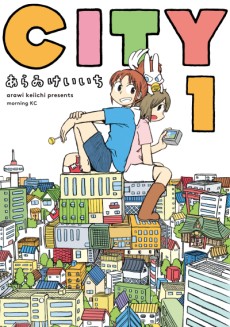
CITY THE ANIMATION
STATUS
COMPLETE
EPISODES
13
RELEASE
September 29, 2025
LENGTH
27 min
DESCRIPTION
This town, is not just a normal town.
There's laughter, love and emotional moments.
An unpredictable ordinary life presented by the residents.
Exciting stuffs come one after another. Welcome to CITY.
(Source: Kyoto Animation)
CAST

Wako Izumi

Yui Ishikawa

Midori Nagumo

Mikako Komatsu

Niikura

Aki Toyosaki

Eri Amakazari

Azusa Tadokoro

Matsuri Makabe

Ayaka Nanase

Riko Izumi

Yuu Wakui

Tsurubishi Makabe
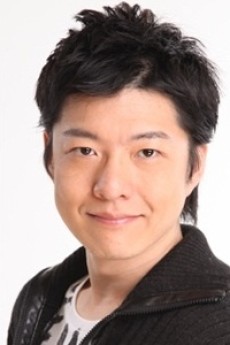
Yoshihisa Kawahara

Tatewaku Makabe

Miyu Irino

Ryouta Adatara

Satoshi Inomata
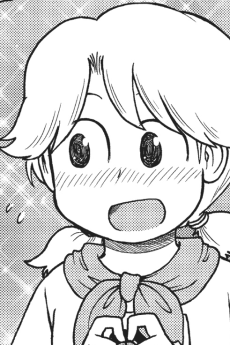
Sumire Sakurakomi Tanabe

Yuuko Gotou

Oni Kamaboko

Yuu Miyazaki

Todoroki

Ryouta Suzuki

Nobuteru Tekaridake

Jun Fukuyama

Hotaka

Jin Domon

Ii Hito

Kiyomitsu Mizuuchi

Adatara Hakase
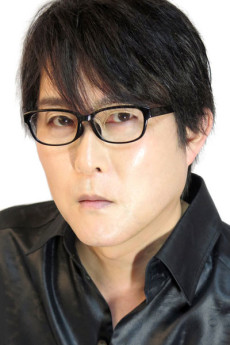
Takehito Koyasu

Obaba
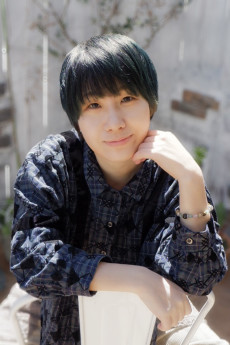
Kazutomi Yamamoto

Sora Adatara

Yuuki Tenma

Kamome Adatara

Coco Hayashi

Henshuu-cho
Kiyomitsu Mizuuchi

Umi Adatara

Haruna Fukushima

Tatsuta Adatara
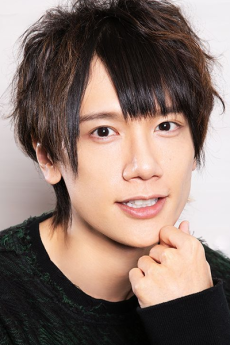
KENN

Adatara no Chichi
Takehito Koyasu

Adatara no Haha

Mayumi Asano

Rindou Obina
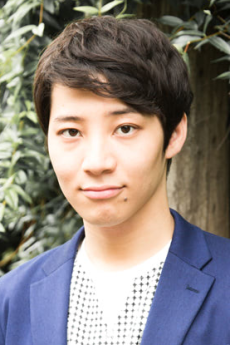
Makoto Kaneko
EPISODES
Dubbed
Not available on crunchyroll
RELATED TO CITY THE ANIMATION

REVIEWS

ZNote
Even when I wasn’t laughing, I was loving the fact that it exists. And that’s what it’s all about.Continue on AniList(Video includes audio. Be sure to unmute) I had a long conversation with a friend over Discord voicechat two days ago, and I said something during the course of it that seemed to catch him off-guard. When we were talking about our favorite anime of the year up to this point, I made the point of mentioning CITY THE ANIMATION and, more specifically, that while it didn’t always make me laugh, I’d readily call it one of the best things that had been released in 2025 thus far. My friend took issue with this stance, saying that it was ridiculous to say that since, for all its aesthetic prowess—and even he admitted that there was plenty to be had—a comedy’s first and foremost job is to make us laugh. If it doesn’t do that, a comedy isn’t doing its job properly. He didn’t find its humor funny, such to the point that whatever other potential gifts that lay within just weren’t worth calling it a show worth watching. I understand why this mode of thinking exists. The word “comedy” is supposed to carry with it the inherent implication that it should make us laugh, and if it doesn’t, we more-readily say that it’s a bad comedy.
But over the years since I started watching anime regularly, I feel as though I’ve undergone a personal reshuffling on two fronts that are relevant for talking about CITY THE ANIMATION: one, that my sense of comedy is less about making me laugh and more about having fun overall, however it manifests. And two, that the anime is, like lots of Kyoto Animation work, part of a larger pattern that I’ve become more aware of both by watching and learning more about anime and anime production specifically.
(Credit to Ishidate Taichi, the series director. From its first piece of animation, the anime moves with palpable energy and zest, transitioning smoothly from 3D to 2D through its use of the raindrop as a cover. The anime’s world is colorful, and it wants you to know that immediately) I’ll talk about the latter later, but let’s start with the former and a simple question: did CITY THE ANIMATION make me laugh? Yes, and no. In its crazy, noisy, bizarre town, there’s no telling what kind of crazy, noisy, bizarre oddity will arise from somewhere within it, making its residents have to deal with that something. And in a place with so many people from so many walks of life, who’s to say what will cause what to transpire? Whether it might involve Naguno being recruited to run like an absolute madwoman and make a soba delivery and chase down a thieving cat, Captain Obina having the football team standing at attention like in the army while remarking that they’re borderline useless without their star player, or Makabe and Ecchan having a conversation about eternally transforming money into counterfeit and then traveling home in-montage while avoiding a giant bear as part of the journey, the underlying philosophy is always the same. Do what you can to be wacky, and if in the process you make someone laugh, then that’s a happy consequence! There is no “plot” in the more all-encompassing sense because the overall sense of mood is the plot and the point.
(Credit to Satou Tatsuya, routinely one of Kyoto Animation’s most-talented animators, and often the one tasked with some of their most striking moments of beauty) The mood can be glanced by just casually looking at what’s going on. Essentially any episode at any timestamp will give the impression of a manic energy suffused throughout the anime. Because each vignette generally speaking is anywhere from about 8-10 total minutes, every small story within the superstructure requires a flow of motion. That doesn’t mean that it’s always screaming itself red or having a magical explosion of animation at every given time (that would be closer to something like Dead Leaves or similar), because there are indeed many times where it calmly lets the mood set before flipping the table and letting all hell wonderfully break loose. Everything was so tightly composed that laughing as a reaction to a thing that was happening somehow felt irrelevant. It was always offering something brimming with confidence and abandon that I couldn’t help but love. It’s a circumstance where, both on the technical front and the comedic front, the fuse is always waiting to go off, and when it does, it never feels out of left field even as it pulls a gag or a non-gag moment that could be taken as out of left field.

(Unknown credit, adapting a gag from chapter three of the manga. The adaptation honors the visual and comedic sensibility of Arawi Keiichi’s original manga, while often adding new perspectives or movements that would reasonably exist based on the source gag) But what is definitely of left field is just what exactly went into this from the production front. According to an interview with Ishidate (special thanks to kViN for providing some details on the matter), he had hoped for an adaptation of CITY THE ANIMATION back in the summer of 2022, and was surprised at the near-immediate approval of the work. Kyoto Animation already had experience with Arawi through adapting Nichijou, and likewise, Arawi couldn’t contain his own excitement as he eagerly jumped at his editor’s suggestion to adapt CITY into Kyoto Animation’s hands. Ishidate and Arawi apparently laughed like idiots at a writing camp as they shared ideas about how to make the anime realized on the small screen, and Arawi directly worked at the studio rather than speak through an editor or proxy. The process was so infused with vitality that showed a kind of communion between creator, creative staff, and creative product. It’s why talented people like Ishidate can direct something like CITY THE ANIMATION after having worked previously as director on Violet Evergarden, a series on the clear opposite side of the spectrum to CITY THE ANIMATION, and why the studio’s staff handle both types of aesthetics and moods. Ideas, and the people who make them come to life, thrive in an environment that can actually accommodate them.
(YouTube video includes audio. Be sure to unmute. Unknown credit for animation clip. Episode 5, directed by Oota Minoru, is a masterpiece of both ideas and execution, making for an aesthetically dense wellspring of expression) And the anime industry needs more stuff like this happening.
This may be a bit of a revelation or shock to any relative newcomer to, or more-casual fan of, the medium reading this (hello there! Tell me what you like!), but if I may take a quick second to be rather uncouth, the anime industry is a fucking terrible place. As animators and studios find themselves descending into ever-thicker and more unpleasant webs of production issues, tight deadlines, and now the encroaching reality of AI and how it risks putting out of work all those people in the ED credits who do thankless / seemingly-invisible work that we don’t learn the names of (assuming they get credited at all, which is another problem altogether), anime is a business enterprise concerned about getting content out the door moreso than making any artistic statements. Especially in the current climate of the Reiwa era, seasonal listings are flooded with shows we won’t remember within a couple of months, or shows where the titles are more than enough to make someone think twice about tuning in to the first episode.
CITY THE ANIMATION may not be the funniest thing under the sun, but its existence is a symbol that sometimes, there are more-significant macro-level concerns and understandings of how an artpiece orients itself into a grander design than whether a bit involving takoyaki in episode three had me laughing my head off (it did, for the record). But isn’t that a navel-gazing philosophy? I don’t think it is. Kyoto Animation is one of the last bastions of giving its ideas the chance to not only develop gradually, but also see their realization while actively trying new boundary-pushing and active training, as has been their longstanding tradition. They, and CITY THE ANIMATION, are an odd duck of the best variety, one which helped the studio codify their moe aesthetic through the 2000s, wildly influenced the moe aesthetic of the early 2010s, etc. And here in 2025, they haven’t come close to exhausting their creative juices yet. They didn’t need to make a physical diorama for episode five and have these practical non-animated moments, but they did it anyway – the idea of “Let’s try it just because we can, and let’s see if it works” is beautiful as a thing in and of itself that I can’t help but be thankful that it exists, even if I found it an unfunny husk begging for death (it wasn’t, for the record). When a piece of media vibrates at just the right frequency, it radiates warmth even in its moments that affectively “don’t work.”
Why does this matter? One of my university students asked me at the end of an academic year what’s the point of praising something, however “new” or “interesting” or “ingenious / ingenuous” it might be, if it doesn’t move us personally? Why praise that which doesn’t reach all the way? I couldn’t help but remember this in light of the conversation with my friend from a couple of days ago. Years later, and with a lot more media consumption and instruction under my belt, I have a better answer (I hope). To that, I say that it is important to recognize that there are, at times, greater perspectives to consider than one’s own ego for whether “thing funny” or “thing not funny.” It is more about one’s own ability to understand that a different mode of thinking is sometimes required for watching something you realize on some level is truly special, even if it doesn’t completely coincide with what you want or like. It is about making YOUR effort to reach the creative energy on its own terms rather than waiting for it to “reach you.” It is actively broadening your own horizons into territories you didn’t dream of or didn’t think you’d ever chart or learn, and how through that, you will be remade into something newer and more beautiful, even if you still come out the other side not actually liking the thing in question.
Is that not worth celebrating?
(Unknown credit) But let’s also not overstate the case – this anime will be, as it is in the here-and-now, endlessly compared to its earlier progeny Nichijou (and arguably even Lucky Star within the Kyoto Animation canon), both stylistically and structurally, and elsewhere with other comedies of similar swagger. It also is likely not going to rewrite any book anytime soon, both in terms of how to create comedy-centric anime or industry practice. The anime industry will be as problem-laden as it was before this anime existed, if not moreso as it lumbers into its (un?)certain future as Kadokawa prepares to adapt whatever is going to be its next Long Light Novel Title with a Highly-Specific Gimmick That Might Involve Reincarnation in Another World While Maxing Out My Vigor Stat.
(Credit to Ishidate Taichi) But for thirteen Sundays over the summer and into the beginning of autumn, a kind of unrestrained vibrancy, happiness, and joviality shined. And it was called CITY THE ANIMATION.

Scheveningen
A strong absurdist comedy that paints a charming picture of its setting but can be a bit hit or miss with its wide castContinue on AniListCITY is a strong absurdist comedy that paints a charming picture of its setting through its large ensemble cast. Though its sheer number of characters, which all exist in their own subgroupings that only interact with each other occasionally, can lead to lulls or even misses with some of them. To the show’s credit, it does demonstrate a wide comedic range, being able to execute everything from heavily character driven skits to those composed of absurdist non-sequiturs. But despite having a sketch comedy element to it, CITY is still structured more along the lines of a sitcom with a large recurring cast that maintains continuity across episodes. This naturally makes the few long form comedic scenarios that last whole episodes the strongest and funniest moments the show has to offer. While the impact of these set piece moments are definitely reliant on setting up the entire ensemble cast, it does leave the show feeling like it is obligated to run skits with its less well realised characters and dynamics. It is still abundantly clear despite the ensemble format that Nagumo, Niikura and Izumi are the strongest characters with how their skits almost always land. This is helped in no small part by the voice acting, but it is hard not see how a structure a little closer to Nichijou with more focus on a core set of characters would have been playing more to Arawi’s strengths as a writer. Perhaps that is why some of the tender emotional beats that serve as the comedy’s falling action feel less impactful than they could have been. CITY does still succeed in painting a rich and vibrant image of its setting while weaving its large cast of characters into a city-wide tapestry, but it also hard not to notice the few definite dull spots present.
It is still undeniable that the writing, animation and cinematography of CITY displays excellent skill when it comes to their comedic timing and the sheer variety of skits they can execute. Whether is physical comedy that is delivered through only animations and sound effects, to jokes that are composed primarily of a character monologue, the show is able to execute all of them with a high degree of polish. There is definitely a much larger subjective element to comedy that other genres, especially for the absurdist comedy that is frequently used, but it is possible to acknowledge something is funny even it is not personally amusing because of preference or a different cultural context. CITY undoubtedly meets this standard with a high degree of consistency, which is arguably the most important thing for any comedy given its core purpose.
However, a price that seems to be paid for this wide range is an equally expansive cast to create the pretext for these scenarios, which comes with its own benefits and limitations. Having a large ensemble cast was certainly planned from the outset, with the opening narration of the first episode, despite being a non-sequitur joke, clarifying the shows intention to highlight the rich interconnectedness of its setting. CITY does achieve this with how the different subgroups of its characters occasionally overlap or affect the comedic scenarios the others are put in. It does lead to the city itself, or at least its residents as a whole, feeling like a character and an integral part to the atmosphere of the show. This is crucial for its massive comedy set pieces like the city race or escape from the hospitality towers. A show more narrowly centred around just Nagumo, Niikura and Izumi might have created the impression that these long skits were an extended cameo that distracted from how the core group of characters were responding to the situation. CITY succeeds in keeping the audience interested in the antics of each group as they all interact with the same scenario, which in turn maintains a good sense of momentum in these episodes. But perhaps most importantly, it is this general connection and familiarity that the audience has built up with the setting as a whole that gives the conclusion its emotional punch, seeing them come together as a community or closing off a significant story arc for particular characters.
This does come at the price of CITY occasionally feeling it is not always focused on its most well realised elements. While the core purpose of almost every segment of the show is comedy, it does feel like certain skits with parts of the cast were done almost by the numbers out of a need to maintain their visibility in the story. Of course, it still unreasonable to expect every skit to land perfectly, and part of the point of an ensemble cast is to provide variety and opportunities to experiment. Yet it cannot help but feel like some characters receive more skits after their initial joke because there is a planned interaction between them and some other group much later down the line, rather than there still being comedy to mine. Despite there still being plenty of subjectivity to this, the mangaka of Mr Bummer and the magazine editing group in particular feel like they have little variation after their initial jokes are spent and are dragged along solely for exposure before they again feel like they have a comedic purpose once they group overlaps with Izumi. In a similar vein, the many of the skits that involve just Matsuri and Eri as a duo seem more intent on building an emotional arc than there being an inspired joke to be told which necessitated using their particular characters or dynamic. While the arcs of these characters groups still all eventually paid off to reasonable effect, it gives the distinct impression of lulls in the comedy with these skits feeling more like obligations instead of their jokes having fought for a place in the story.
Perhaps if CITY were more character agnostic, serving almost solely as the blank canvas for whatever sketch comedy the author concocted that week, the quality of its ensemble would feel more evenly spread out. Yet it is abundantly clear that Nagumo, Niikura and Izumi are much more well realised than most other members of the cast. They are written with the most distinct voices, which is then elevated again by their voice actors, and are consistently able to carry skits just playing off one another’s personalities. There are even compelling solo skits that involve only one of the trio, built entirely around their particular quirks or a running gag. Beyond just building off previous story beats or skits, using the trio without any set up to parody certain trends like attempting to get internet famous through inane videos make for hilarious segments that are almost entirely sketch comedy. As it stands, there is still a strong emotional underpinning in their relationships, particularly between Nagumo and Niikura, but it is hard to say that it has been utilized to its full potential like the connection between Hakase and Nano in Nichijou. It leaves the viewer craving more, and makes the other skits that are slightly weaker stand out more than they would in a vacuum.
While comparing CITY to Nichijou does feel like it might only be a disguise for being disappointed over preconceived expectations, it is somewhat apt since the two works are still in the same genre with a similar structure. Where they differ is in how Nichijou concentrates on skits with its six core characters , leaving those comprised of only the supporting cast or one-off sketches to form the minority of its stories. CITY leaning more towards the inverse of this ratio while still having three noticeably stronger characters ends up feeling distinctly imbalance, leaving some skits to feel like they are treading water or just there to force a certain story structure. Mostly notably, this has limited the impact of the emotional beats in CITY since comedies are often left predominantly reliant on raw screentime and familiarity to build a connection with the characters given their genre. This emotional impact of Matsuri and Eri’s story coming to a conclusion did not cut as deep as it could because of how the time spent on their scenes left them only feeling like one of many, and how much of their interaction during skits felt less like comedy and more their character beats being forced into the shape of jokes because playing it straight was not an option. Although current structure of the show is certainly still serviceable and has a clear purpose, it’s hard not to see that its strengths lie more in particular characters and a different approach might have led to a more consistently strong show.
Overall, CITY is still undoubtedly strong in almost every respect from its comedic timing, direction, animation, to voice acting. But there are distinct hit and miss elements that form a pattern around some of its supporting cast which detracts from its overall composition as a series. This will vary quite a bit given how comedy is more subjective than almost any other genre, but a good litmus test might be how its emotional moments also more limited in impact than they could have been due to the show’s spread out character focus. While something structured more closely to Nichijou might have made for a better overall story, it is also unfair to criticise a writer for not just repeating their last work when they also likely wanted to try something new with CITY. And to their credit the new elements of having the setting be an integral part of the atmosphere and story was successful. With all that said, it seems like an 8 out of 10 is an apt score since CITY as a comedy has polish fundamentals and some fantastic high points, yet still could have made for a better experience if its character focus were just a bit more concentrated.

melamuna
Carrying Nichijou’s Chaotic Spirit Into a New Generation of Anime FansContinue on AniList
Summer 2025 is packed with long-awaited sequels such as the second seasons of My Dress-Up Darling and DanDaDan, along with highly regarded new anime that have made a massive impression among audiences, including Gachiakuta, The Summer Hikaru Died, and Takopi’s Original Sin.
Amid this intense, content-rich season, one studio has chosen not to compete with the big sequels or challenge the bold originals, but instead to offer something familiar, lovable, and close to the hearts of its fans—a comedy series that’s a nostalgic nod to the past, while also serving as a spiritual legacy to Nichijou: My Ordinary Life. That series is CITY THE ANIMATION. ***
For many, it’s natural to compare CITY and Nichijou, and you wouldn’t be wrong in doing so. They share the same episode structure, the same signature humor—heck, they even have the same author. So yes, the comparison makes sense. But before diving too deep into that, it’s worth acknowledging how CITY THE ANIMATION stands out on its own, especially in terms of animation.
Compared to other anime of Summer 2025, it shines above the rest with its unique art style and its vibrant, lively use of colors. And while that art style might lead some to think it’s “kid-like,” that assumption is quickly shattered by its intensely hyper-animated sequences, down to every minute detail—sometimes even rivaling or surpassing other anime this year where animation quality was a major selling point. This is thanks to Kyoto Animation pouring all their passion into producing—if not overproducing—a series about the mundane lives of its characters.
Yes, CITY THE ANIMATION is literally just characters going about their daily lives within their own circumstances. That might be a turn-off for audiences who aren’t into slice-of-life, but it wins them back with countless sprinkles of absurd comedy, paired with its intense animation. It’s the kind of anime you can simply sit down with and enjoy, much like Nichijou.
However, one element separates it from Nichijou: its focus on character development. While Nichijou centered almost entirely on absurd comedy—just like this series—CITY takes it a step further, weaving in moments that develop its characters’ mundane lives into arcs that make you feel emotionally invested. It manages to balance absurd comedy with over-the-top animation while still giving depth to its characters, even with the limited screentime some receive.
That said, in terms of pure comedy, Nichijou still outshines CITY. In some cases, the overly animated sequences even work better in Nichijou than they do here. But since there aren’t many anime like CITY nowadays, I’m willing to give it a pass. Still, that scarcity is also one of the series’ weaknesses.
The structure of CITY THE ANIMATION mainly consists of short chapters mashed into a 27-minute episode—a format that was more popular in previous decades. Today, audience demand has shifted; many now prefer longer, more consistently connected episodes over episodic adventures. This isn’t the anime’s fault, as the source material mirrors the structure of Nichijou, which—aside from its humor—is very much a product of its time.
There’s still a solid minority of viewers who are fine with this kind of structure, but for newer audiences, the “yesteryear” format might make it harder to fully engage with the series. ***
CITY THE ANIMATION carries the spirit of Nichijou’s absurd comedy, blended with its overly animated sequences that deliver plenty of laughs and giggles—a true blast from the past in this kind of comedic format. While older anime audiences may feel right at home (or even nostalgic) watching it, newer viewers might need some time to adjust to experiencing an anime series presented this way. ***

SIMILAR ANIMES YOU MAY LIKE
 ANIME ComedyLucky☆Star
 ANIME ComedyAsobi Asobase
 ANIME ComedyChio-chan no Tsuugakuro
 ONA ComedyPlastic Nee-san
 ANIME ComedyRenai Boukun




SCORE
- (4/5)
TRAILER
MORE INFO
Ended inSeptember 29, 2025
Main Studio Kyoto Animation
Trending Level 4
Favorited by 1,449 Users
Hashtag #アニメCITY #ANIMECITY