
MAISON IKKOKU
STATUS
COMPLETE
VOLUMES
15
RELEASE
April 1, 1987
CHAPTERS
162
DESCRIPTION
Travel into Japan's nuttiest apartment house and meet its volatile inhabitants: Kyoko, the beautiful and mysterious new apartment manager; Yusaku, the exam-addled college student; Mrs. Ichinose, the drunken gossip; Kentaro, her bratty son; Akemi, the boozy bar hostess; and the mooching and peeping Mr. Yotsuya. Funny, touching, and a tad off-kilter, Maison Ikkoku is the great Rumiko Takahashi at her very best.
(Source: VIZ Media)
CAST
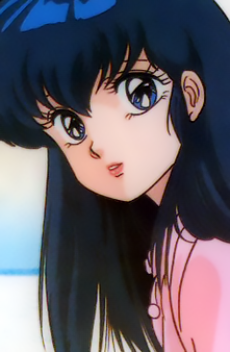
Kyouko Otonashi
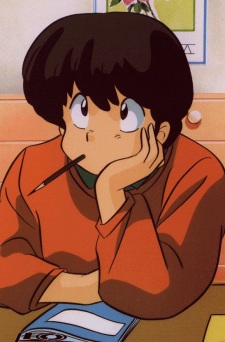
Yuusaku Godai
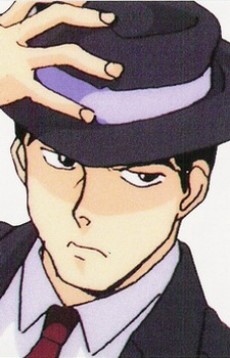
Yotsuya
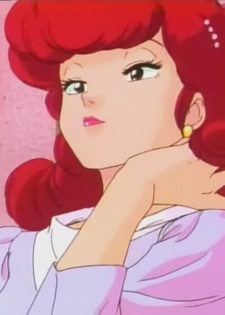
Akemi Roppongi
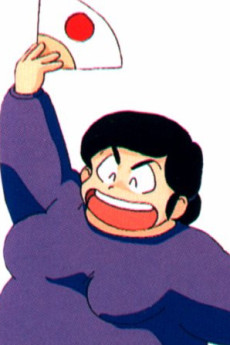
Hanae Ichinose
Kentarou Ichinose
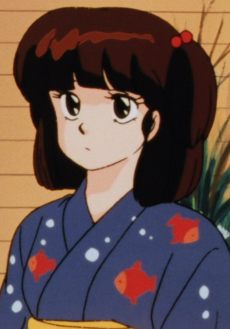
Ibuki Yagami
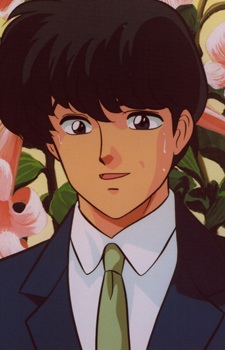
Shun Mitaka
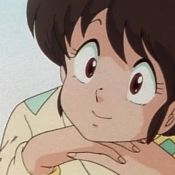
Kozue Nanao
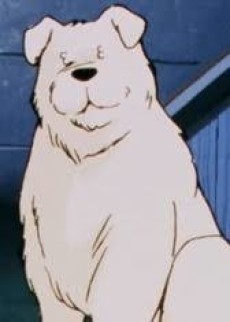
Soichirou-san
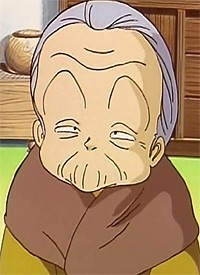
Yukari Godai
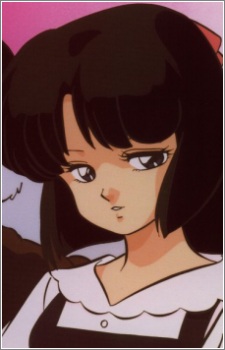
Asuna Kujou
Souichirou Otonashi
Chigusa-ji
Sayoko Kuroki
Chachamaru no Master
Iioka

Otonashi-roujin
Ikuko Otonashi
Sakamoto
Kasumi
Ritsuko Chigusa
Asuna no Haha
Kozue no Chichi

Ayako
CHAPTERS
RELATED TO MAISON IKKOKU
 ANIME ComedyMaison Ikkoku
REVIEWS

Mykurr
Oddly obnoxious yet endearing to me.Continue on AniListI’m going to be honest, the biggest reason I decided to give this manga a shot is simply because it was referenced in a Kaiji spin-off. It also helps that it's a Rumiko Takahashi manga that has significant reverence as one of the better romcoms out there. Considering that many circles I'm in have also greatly praised this manga, I thought it would actually come to be one of my favorites as well. Did it accomplish that? Maybe not, but it definitely accomplished writing its own unique story in its own terms.
One of the most surprising thing I can glean from this is that despite being hailed a classic, a lot of its tropes don’t seem to have been repeated and continued by romcoms in the present. Certain elements of character indecisiveness, multiple characters having multiple love interests rather than just being only one, all of this feels oddly mature in how it presents these characters as being deeply flawed. Granted it really does ride a fine line between endearing and obnoxious and at times completely trips itself up. Yet because of all this, it feels oddly refreshing that despite how old it is that its still quite the unique experience in reading this.
Another issue I have is that despite introducing some really interesting characters, the story sometimes doesn't do much with them after their introduction, even having them disappear for up to 30+ chapters even if they’re a resident of Maison Ikkoku. By the time you finally get to see them again, the manga is already wrapping itself up towards the conclusion. Because of this, some character arcs feel incredibly unfulfilled when they just show up suddenly in the story again after being gone for so long and all of a sudden they just have this huge turning point that feels unrewarding with how little we’ve seen them. I wish I could love the characters more, but this story really doesn't give me many opportunities to.
Nonetheless, this manga does indeed have charm. Rumiko Takahashi's trademark art style is very fitting in a comedic yet adult story about growing into a proper adult who can support oneself. Despite very closely inching to same face syndrome, each character is oddly distinct enough that I never really confuse them despite characters Like Godai, Nikaido, and Mitaka having very similar faces. The backgrounds with certain locations such as Maison ikkoku and the various townspots surrounding the boarding house are also depicted to be very vibrant and lively which adds more to the setting. Regardless of my opinions on Maison Ikkoku's story, I would definitely read more Rumiko Takahashi for her designs alone.
Ultimately, there’s an element of relatability and wistfulness in reading Maison Ikkoku with how Yusaku Godai develops throughout the story. Going from a Ronin to a college student and then trying to find a job is painfully easy to grasp especially if one had similar life experiences. His relationship with the main heroine, Kyoko Otonoashi, despite having hiccups that can amuse and annoy is still endearing with how it all works out in the end is very heartwarming to see the whole journey through. I like this manga, but it's not as up there as I wanted it to be.

DNSS
Can we go on loving?: To love is to fear losingContinue on AniListPreface
Damn, it must be great to be Rumiko Takahashi. Imagine this, starting your career at just 21 years old. Right out the gate, no time wasted, she creates Urusei Yatsura, one of the most influential manga series of all time, whose impact still resonates across countless titles today. Absolutely astounding.Two years later, she begins serializing Maison Ikkoku, a mature, intimate romance that couldn’t be more different from her debut work. Just look at this woman’s mangagraphy, her résumé — the sheer talent and impact she’s had, all while refusing to slow down even now, at 67 years old!
Any attempt to analyze her work must, of course, begin with the utmost respect and reverence for this legendary writer, a true cornerstone of Japanese artistic canon. But honestly, even a mediocre AI could compile a dry list of facts about Takahashi’s influence on manga history. So, I’ll leave that part to the machines and stick to the human art of writing. If you’re curious — or if you’ve been living under a rock and don’t know who Rumiko Takahashi is — go google her, crack open an encyclopedia, read her bio. Because her name disappears from here on out.
My goal is to honor her work. And to do that properly, we must discuss her art through her art — not through external accolades. There’s no need to lean on her authority, her importance, or her unshakable integrity as an artist. Those are essential for understanding her as a cultural figure, but not for grasping her stories. Her works stand on their own. Their quality speaks for itself, transcending time and culture.
From this point on, we talk about Maison Ikkoku and Maison Ikkoku only.
Now, let’s talk about love.
__COME FLY WITH ME__ 
Can I tell you what Maison Ikkoku is about? Damn it, you haven’t read it yet? Well, you should. Maison Ikkoku is about love, about falling in love, letting yourself be loved, and, above all, fearing love.
We follow Yusaku Godai, a clumsy, down-on-his-luck ronin with bleak prospects, living in a tiny boarding house surrounded by a ragtag group of troublemakers hell-bent on making his life miserable. There’s Yotsuya, a creepy voyeur; Akemi, an uninhibited waitress; and Hanae, a middle-aged woman who loves to drink — key players in this claustrophobic, oppressive, and enraging household.
Fed up with this daily hellscape that only hinders his studies, Godai decides to move out, desperate to escape his chaotic neighbors. But not so fast — a small surprise throws his plans into disarray. A new manager takes over Maison Ikkoku: our heroine, Kyoko Otonashi. Beautiful, young, and deeply melancholic, Kyoko immediately catches the eye of the ever-fickle Godai.
You know, it’s funny — and not at all surprising — but 45 years later, men haven’t changed one bit. Godai perfectly embodies the timeless stereotype of the shallow guy who falls for the first pretty woman who shows up. I feel you, Godai. I really do. If she’s kind? Even worse. How do you not fall in love? Love isn’t that complicated, it's just so easy.
And so begins our story: a young man with no present, surviving only on hope for the future, meeting a young woman also without a present — but one trapped in her past. Can love bloom between them?
__THE MAN LOST IN THE FUTURE AND THE WOMAN STUCK IN THE PAST__ 
Can we live without love? If you don’t love, you want to. If you already love, you want to keep loving. And when you lose love — how do you love again? Kyoko Otonashi carries an immeasurable pain: the endless grief of her first love, her late husband. A widow at just 22, Kyoko resigns herself to solitude. She’s kind, warm, and nurturing — yet romantically untouchable. The locks on her heart are unbreakable.
Kyoko doesn’t see — or want — a future. With her love ripped away so violently, the idea of new stories feels impossible for a heart still clinging to cherished memories.
So what Godai faces isn’t just the challenge of building new love — but dismantling an old one. Opening her heart to him would feel like a betrayal of her past. For someone devoted to a lost love, what does it mean to love again? If we love, can we ever stop? Can we replace a true love? Can we forgive ourselves for moving on?

The answers aren’t clear. Solutions are tangled. And with Godai being so clumsy and untrustworthy, any hope of a simple resolution is doomed. How do you compete with the idealized memory of a flawless love when you’re a walking disaster?
This is where Maison Ikkoku’s brilliance shines — its uproarious comedy perfectly balancing its romantic drama. Disastrous misunderstandings and dragged-out conflicts aren’t just cheap plot devices to prolong the story. No. These inconveniences shape Godai’s growth and his evolving feelings.

Godai is indecisive, impulsive, unreliable, desperately needy, and riddled with low self-esteem. His life revolves around an uncertain future — getting into a mediocre college for a major he’s too ashamed to admit. This slow, shaky journey actually mirrors his own insecurities. Because while he awaits the solutions to his life in the hope of a better future, he fears them just as much, for the simple possibility that he won't find the solution to his problems in them.
It’s tragic. But that’s love. Godai doesn’t live in the present and dreads the future. Kyoko doesn’t live in the present and dreads the past.
Love, save us.
__TIME WILL HEAL__ 
This melancholic romance, disguised as a side-splitting comedy, walks a delicate tightrope.
The pain of losing a loved one can’t be measured. Grief hits everyone differently. Losing a true love? Even worse. But Kyoko must eventually realize that life doesn’t end when a loved one is gone. Choosing eternal mourning isn’t proof of love or loyalty — it’s self-sabotage. Life goes on, and building that future is these characters’ duty. Our duty aswell.
We don’t need to go as far as grief — even breakups make the point. Let’s be honest for a moment. Think back, dear reader, to your old loves. How many survived? How many remain, and how many faded? For me, a modern-day Godai, the examples are painfully vast.

For Kyoko, a new romance isn’t betraying her past love—it’s a chance to love again. This isn’t a polyamorous manifesto; let’s not get tangled here. Don’t cheat, don’t abandon your passions—but never stop moving forward. We don’t have to erase the past to embrace the present. Old memories can coexist with new realities.
Maison Ikkoku masterfully illustrates human uncertainty with impeccable subtlety and sharp humor. Through brilliant, immersive writing, we witness a story that’s cruel, hilarious, and heartwarming. Love serves to mend all this, curing insecurities and complementing each other's flaws; to love is to put together a puzzle, after all. The fragility of the future, the nostalgia for a perfect past, the disposable present—a purgatory separating past fears from future hopes. In the end, as my favorite saying goes: Jacaré parado, vira bolsa.
As a historian by background, my answer is always the same: Time. Never stop loving.


melamuna
The Most Emotionally Satisfying Rom-Com—Even 4 Decades LaterContinue on AniList
__Preface__

When we talk about modern romance mangas, readers would always lean towards the “will she, won't she” and the “misunderstanding” trope—after all, it's what's plaguing the romance sphere with new titles biweekly with their own “unique” quirks, yet they are only adhering to the same old classic formula, and for most readers, that should be enough for them to keep coming back weekly. However, most of the mangas that use this trope tend to get old quite quickly, and that's evident in my case: I had dropped a couple of mangas with that said trope because I couldn't suck it up to read repetitious chapters, and that's the case for most readers as well. This is mostly due to the fact that these manga either didn't expand or flourish their trope or progression with the accompanying characters they'd set out, which may be due to the refusal of stepping forward from their premise. In other words, the characters are boring to read in the long run.
Giving credit where credit is due, there are rom-com mangas that stepped out of that shell; for instance, Kaguya-Sama—one of my most favorite mangas of all time—utilized its trope as a gag while providing warmth and depth to its characters. Walking back through time, popular and influential mangas pop up like Kimi ni Todoke and Hana Yori Dango. However, what I am most curious about is the manga that influenced the core trope. Through online searches through threads and community posts, it all landed at Maison Ikkoku. ***
__Part 1: The Rumic World & It's Characters__

This is not my first exposure to Rumiko Takahashi's works, as I have watched the reboots of Urusei Yatsura (2022) and Ranma 1 1⁄2 (2024), which made me familiar with how she structures her world. Namely, in the span of her works that I have consumed, she'd structured her characters in the utmost trope-y way, right down to the minor details. You can see the similarities of its main characters, structure, and, most important of all, its romantic setup with its “will they, won't they” misunderstanding trope. Working through decades of these tropes, you would assume that readers would get bored with how straightforward and formulaic everything feels, yet this has not been the case. Each story might've followed an aggressive domino effect of misunderstandings, along with Takahashi’s signature style dialogues—a car crash you wouldn't want to miss.
We follow our main character, Godai—a typical Rumic male lead: goofy, misunderstood, and often caught in gullible situations. His main goal is to marry Kyoko, who also fits the mold of a Rumic female lead—timid, kind-hearted, and just as gullible. Despite their contrasting personalities, the two manage to overcome numerous interpersonal obstacles thanks to their shared determination to be together.
Of course, it wouldn't be a Rumiko Takahashi story without a colorful supporting cast who provide comedic relief, serve as the readers' voice of reason, or simply create roadblocks for the main couple. Characters like Coach Mitaka, Nanao, and Yagami act as the primary hurdles to Godai and Kyoko’s relationship. Meanwhile, the tenants of Maison Ikkoku add heart and chaos in equal measure: Yotsuya, arguably the funniest character in the series; Akemi, the ever-reliable vibe check; and Mrs. Ichinose, the emotional middle-woman mediating between Godai and Kyoko.
While the side characters mainly serve comedic roles, they infuse the story with so much warmth and spirit that the series wouldn’t feel nearly as alive or heartfelt without them.
However, in the Rumic universe, these character traits aren’t unique to Maison Ikkoku—they appear consistently throughout Rumiko Takahashi’s body of work. That said, how does Maison Ikkoku hold up against some of her other, much bigger titles?
While Urusei Yatsura dazzles with its otherworldly direction and Ranma ½ leans into chaotic action and comedy, Maison Ikkoku stands out by “vanilla-fying” its tropes to its advantage. Ironically, its grounded, down-to-earth approach allows for a more focused exploration of its central themes and a deeper dive into its characters—despite the many misunderstandings that arise along the way. Stripped of flashy shounen tropes, the series leans entirely on Takahashi’s narrative structure, making it one of the most engaging of the three. By replacing spectacle with sincere character development, Maison Ikkoku showcases just how powerful Takahashi’s writing can be. ***
__Part 2: The Perfect Rom-Com Formula__

We’ve read it hundreds of times by now: guy likes girl, girl is unsure of her feelings, guy pursues girl, an obstacle gets in the way, a misunderstanding occurs, they reconcile—only to end up back at square one. It’s a familiar cycle in countless romcom manga, and Maison Ikkoku is no exception. After all, it's one of the earliest mangas that popularized this formula. With that said, how did this hold up after 4 decades of its release? Surprisingly well, I might say.
Though certain themes in Maison Ikkoku are undeniably a product of their time, the series contains many elements that still resonate in today’s manga landscape—and surprisingly, some of these elements remain underexplored in modern titles. In the early volumes, we see Godai struggle to properly express his love for Kyoko. While much of this is due to external interference, it's also a result of his own shortcomings. This dynamic quickly pushes the series into a deep rabbit hole of layered misunderstandings—one after another—that, while hilarious, create a gripping tension. It's the kind of storytelling that compels you to flip through page after page, eager to see how it all eventually unravels.
It’s a formula that many manga have since mastered—but none compare to Maison Ikkoku, which takes its downward spiral of a plot and cranks the chaos meter up to eleven. The series thrives on situations that make you laugh at how absurdly they unfold, only to leave you frustrated when they end on yet another unresolved note. As the volumes progress, the chaos only intensifies, digging the characters deeper into a hole built from earlier misunderstandings—so much so that some moments are recognizable purely by the miscommunications that sparked them.
However, constantly escalating the antics doesn’t always guarantee that readers will stay engaged. Many might put the series on hold until it ends, drop it entirely after predicting the next plot beat, or simply grow tired of the repetitive shenanigans. Romcom readers know how frustrating it can be when the same scenarios play out over and over again. But Maison Ikkoku understood this risk and cleverly turned that very flaw into one of its strengths. ***
__Part 3: Misunderstandings and it's Consequences__

Maison Ikkoku is primarily a rom-com manga that centers around the classic "will they, won't they" trope, with characters designed to repeat the same antics over and over—a formula that, understandably, can become tiring for readers, even with a story that spans several years. However, what sets Maison Ikkoku apart from most rom-coms is how it acknowledges this fatigue and incorporates it into the narrative itself, starting with its characters.
The first hundred chapters largely follow typical slice-of-life elements. And while fans may enjoy the charm and humor, it's hard to ignore the creeping sense of repetition and emotional wear. Yet rather than ignoring this, the manga leans into it. The characters themselves begin to reflect the reader's frustration. Godai remains relatively optimistic early on, but Kyoko starts to show signs of emotional exhaustion. Over time, her patience wears thin, and we see the cracks forming as she struggles with Godai’s ongoing indecisiveness. Meanwhile, Godai grows increasingly frantic, overwhelmed by the realization that time is slipping away.
This evolution isn’t limited to the leads either. Side characters and even obstacle characters mirror this shift. Mitaka takes drastic measures. Ichinose begins asking deeper, more reflective questions. Akemi’s frustrations grow sharper—and more relatable to readers. The more repetitive the formula becomes, the more the characters themselves become frustrated by it. That self-awareness is what makes Maison Ikkoku smart—and surprisingly realistic. It doesn't deny the cyclical nature of romantic tension; it embraces it, shows its toll, and uses it as a narrative device to evolve the characters and deepen the story.
Rom-coms in this setting often struggle to present meaningful consequences for their characters. More often than not, they either rush the story—ruining both the climax and epilogue—or rely on unrelated factors that feel forced or made up. However, while familiar themes do appear in this series, they unfold naturally, grounded in the characters' personalities and the story’s progression. The consequences in later chapters stem directly from earlier events and character traits.
There are moments when it feels like certain characters were forgotten—take Nanao, for instance. She was a prominent figure in the early arcs, then seemingly vanished, only to reappear with significance in the final arc. Yet, her return and resolution feel earned, and her earlier absence makes sense in retrospect. Another example is Kyoko herself. Throughout the series, we witness her gradual descent into distrust and emotional exhaustion, driven by the endless misunderstandings. She reaches a point where she’s on the verge of giving up, and the frustration felt by the readers is perfectly mirrored in her journey.
What makes this series stand out is how the characters mature in tandem with the readers’ growing understanding of their flaws and quirks. Even if you already know how most rom-coms end, the real joy lies in the journey—and this one brings you along for every emotional high and low. ***
__Part 4: A Love that Stays Through Decades__

Since its first serialization in 1980, Maison Ikkoku's premise felt novel for its time. However, in today's landscape, the abundance of rom-com titles can be overwhelming—so much so that just scrolling through the options can lead to fatigue. And yet, despite all the newer and more beloved series that have captured the attention of a younger fanbase, Maison Ikkoku still stands out. With all the praise I’ve given above, did it truly hold its own among modern titles? Oh, it most certainly did.
What’s often missing in modern rom-coms is the heart of it all. Sure, it can be fun to follow characters caught in a typical “will they, won’t they” scenario, but many of these stories lack that essential spark of humanity within their panels. It’s not about how quirky a character is, but how deeply they feel—how big their heart is—that keeps you turning the pages. You want to laugh with them, cry with them, get frustrated by their mistakes, and cheer for their growth.
Maison Ikkoku—cheesy as it may sound—makes you care about its characters. Rivals like Mitaka and the other romantic entanglements aren’t just thrown in as obstacles; they feel like real people, and you want them to find happiness too—just not at the expense of the main couple. The tenants may be chaotic and often annoying, but they inject life into the otherwise mundane days of Godai and Kyoko. Godai’s relentless determination to improve himself, and Kyoko’s emotional turmoil as she wrestles with her past, give the story its emotional weight.
Maison Ikkoku’s down-to-earth nature—where everything revolves around people simply trying to live their lives—is what makes it so resonant. It’s a story that feels like a warm breeze of nostalgia, a comforting hug, or even a sigh of frustration that somehow still feels familiar. And four decades later, that same warm, fuzzy feeling continues to reach readers who fall in love with the series all over again. ***
__Conclusion__

I never intended this review to denounce other rom-com mangas out there—Maison Ikkoku itself is far from perfect. It’s undeniably a product of its time, with certain themes and portrayals that haven’t aged well by today’s standards. And yes, many newer rom-coms have had a broader cultural impact or resonated more deeply with modern audiences.
But even so, Maison Ikkoku stands apart by offering a romantic journey rich with misunderstandings, near-misses, and adult themes that often hit uncomfortably close to home. It creates a small, intimate world filled with vibrant life, where its simplicity becomes its greatest strength. The series takes a straightforward premise and elevates it, crafting one of the most emotionally satisfying rom-coms of the last four decades.
At its core, it’s just a simple love story—about an ordinary couple living an ordinary life, caught in extraordinary situations—and yet, few have matched its emotional resonance and lasting impact. ***
SIMILAR MANGAS YOU MAY LIKE
 MANGA ComedyAsatte Dance
 MANGA ComedyLiving Game
 MANGA ComedyUrusei Yatsura
 MANGA ComedyHachimitsu to Clover
 MANGA ComedyDakara Miyoko desu
 MANGA ComedyAa! Megami-sama!
 MANGA ComedyConbini Maria


SCORE
- (4/5)
MORE INFO
Ended inApril 1, 1987
Favorited by 398 Users