

KANASHIMI NO BELLADONNA
MOVIE
Dubbed
SOURCE
OTHER
RELEASE
June 30, 1973
LENGTH
89 min
DESCRIPTION
The beautiful peasant woman Jeanne is raped by a demonic overlord on her wedding night. Spurned by her husband, she has no outlet for her awakened libido, which develops to give her powers of witchcraft.
The film is inspired by Jules Michelet's non-fiction book "Satanism and Witchcraft", it is the third and final film in the Animerama trilogy, and the only one to be neither written nor directed by Osamu Tezuka.
(Sources: ANN, Wikipedia)
CAST
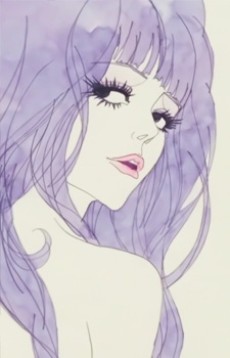
Jeanne

Aiko Nagayama
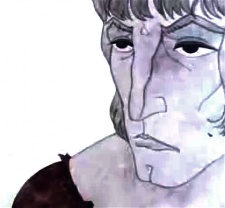
Jean
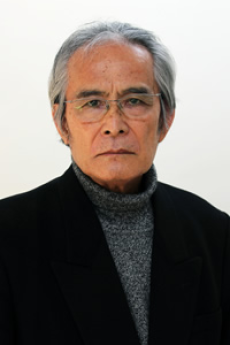
Takao Itou

Akuma
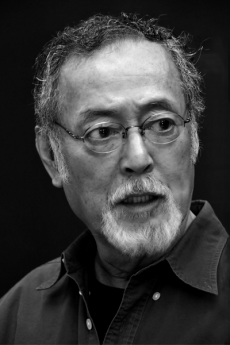
Tatsuya Nakadai
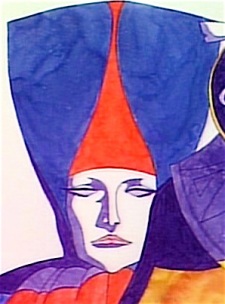
Okugata

Shigaku Shimegi
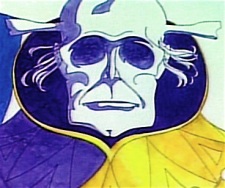
Ryoushu

Masaya Takahashi
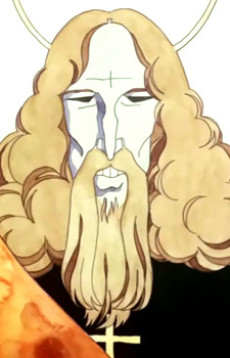
Shisai

Masakane Yonekura
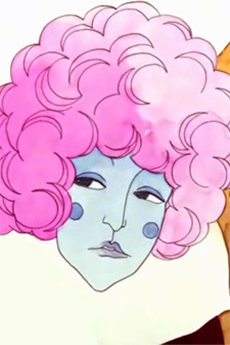
Piero

Taisaku Akino

Narrator
Chinatsu Nakayama
RELATED TO KANASHIMI NO BELLADONNA
REVIEWS

Peng
A free fall, a reverie, a fever dream in the guise of watercolour hentaiContinue on AniList“To be convicted, a witch usually had to be brought to confess. But the signs of witchcraft could also be found on the witch’s body. These signs were the province of the executioner. In Würzburg, the mere threat that the executioner would shave the witch’s body and investigate any apparent marks was often enough to precipitate a confession … There was clearly a sexual element as well, for diabolic marks were often found around the genital area."
"It was believed that the demon could secrete himself in the folds of a witch’s clothing, enabling her to withstand the interrogators or even do them harm. She had, therefore, to be undressed.”
- Lyndal Roper, _Witch Craze: Terror and Fantasy in Baroque Germany_ (2004), 54. The body is central in the medieval and early modern mythos surrounding witchcraft. Given how prominently the body features in Catholic tradition - the Eucharist, for example - this is unsurprising. But when it comes to witches, the body was ground zero for everything concerning the diabolic. Accuse her of fornicating with the devil, strip her, shave her, misidentify a birthmark or two, hook her up to the strappado, stick some needles into her, burn her at the stake, and scatter her ashes under the gallows as added insult. Naturally then, the body - specifically the naked body - is centrepiece in _Belladonna of Sadness_. As the final entry in [Osamu Tezuka](https://anilist.co/staff/96938/Osamu-Tezuka)’s _Animerama_ hentai anthology series, of course it would be. However, whilst _Belladonna_’s lurid imagery is undeniably erotic, sometimes hilariously so, it’s rarely titillating. And if it’s aim is to arouse (it isn’t), then it does a pretty shitty job. But that’s not why you’re thinking about watching it.
But there is a story. _Belladonna_ is loosely based on Jules Michelet’s [_La Sorcière_](https://www.goodreads.com/book/show/25417539-la-sorci-re?from_search=true). Michelet forwards a sympathetic view towards witches here, framing the sabbath as a form of popular rebellion against feudal power structures. _Belladonna_ is about rebellion too. Through Jeanne’s degradation we witness her subjugation. Through her transformation she becomes a saviour, leading the (willing) people to blissful damnation. And through her ultimate fate, Jeanne realises apotheosis. Throughout this, _Belladonna_ both embraces and rejects the body. It embraces it, as we’ve detailed, aesthetically. For after all, as the kaleidoscopic orgies are testament to, the body is beautiful and grotesque. On the other hand, it rejects the Church’s doctrine of the body as propaganda and the woman as sacrilegious. Rather, the body is a commodity. Not one that belongs to God, local lords, or husbands, destined to be used and discarded, mind you. But one belonging solely to Jeanne. A bargaining chip that assures her empowerment. Just as the phallic devil and his crossroads deals are too. What’s really important is what happens after the fact. Through Jeanne's sexual liberation, she finds not perdition, but enlightenment. _Belladonna_ isn’t about humanity’s decadent decline. It’s about its salvation. Should _Belladonna_ be avoided by epileptics? Probably. Are its efforts to frame Jeanne’s experience as universal sometimes clunky and forced? Yeah, a little. Is its story one of unparalleled ingenuity and philosophical insight? Not quite. But what it executes well, it executes with hypnotic style. _Belladonna_ is not quite garish enough to be the ultimate midnight movie material. Nor is it impenetrable to the same degree as more obscure arthouse titles. And am I reading a little too much into it all? Possibly. But that’s where half the fun lies. 
Fleur
Experiencing Belladonna is very much like falling down a bottomless rabbit hole.Continue on AniListA corrupted woman is soaked in sin and gradually torn from her soul. Her purity that was once unscathed is now an unbounded commodity. Piece by piece, she is dismantled until the only thing that’s left is flesh and blood. From the ashes of unadulterated youth, now rises something else. The transformation from beauty to grotesque is immediate. A woman is either a maiden or a witch. A sin or a sinner. An unknowing victim or an unholy perpetrator. The existence of both is morally reprehensible. Here we have the scripture of ye old storytelling embedded in every culture, every time, and in every form.
Nonetheless every artifice, every duality inherits a line that exists to challenge it. A tempo-spatial blip where white melds into the black – where Angels mingle with Demons, where grotesqueness is beauty, where tragedy births empowerment, where witches ARE women – explodes with a forgotten force. That coalescing blip takes form in Belladonna of Sadness (Kanashimi no Belladonna): a powerful visual enigma that mesmerizes with bizarre aestheticism and erotic storytelling (one that many will probably write off as a “deep” hentai and in the process, dismiss the work so passionately fueled by the revolutionary spirit that drives all provocative art).
Belladonna is the third and final installment in the Animerama series (adult-themed films) conceptualized by Osamu Tezuka, but due to his early abandonment of the project, it was sought through (in 1973) by Eiichi Yamamoto and produced by Mushi Production. Adapted loosely from the non-fictional musings in La Sorcière by Jules Michelet, Belladonna follows the vicious downfall of a young girl named Jeanne, and thus, her metamorphosis. Even though Belladonna takes influence from Michelet’s book, it is not a literal re-telling. The novelty of Michelet’s work, however, should be noted. La Sorciere attempted to trace the rebellions against feudalism and Medieval practices that subjugated women and peasants. Riddled with folklore, fairy tales, and religious theory, the book opened a new sympathetic vision towards the oppressed, and what eventually manifested into “witchcraft”. Belladonna is a tale about oppression, but also about revolution. What starts off as a fatalistic chain of events steeped in sexual violence and tradition, morphs into a darkly, disturbing tale of empowerment (featuring Satan symbolized as an ever-growing penis, lots and lots of other phallic imagery, and intense psychedelics visuals).
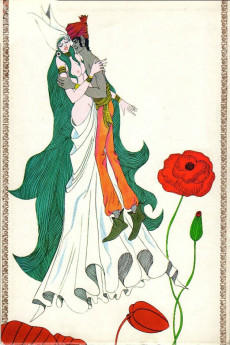
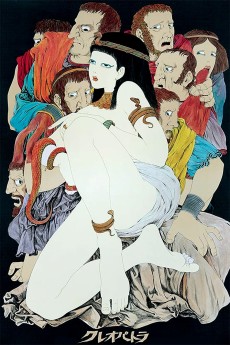
The aesthetical direction in Belladonna is unlike anything I’ve ever seen. Sequences of stylistically-independent paintings that are tied by motion. Styles include Klimt-influenced artworks where the female body is the everlasting focus. The only place where precision in detail matters is on Jeanne, and partly her husband and abusers. Following in the symbolist tradition, many embodied the elements of Decadence. These paintings were full of lurid, exploitative objects that were flourishing with mystical context. Decadent art called for transgression and taboo and expressed them through dreamlike visual poetics. Belladonna adapts this with acuity. Abstract, expressionistic paintings also take hold here. The use of placement, distance, object and how they come alive, both with color and shape all reveal this. There are scenes that are built entirely on geometric progression. The painting starts at one point, transforming into a set of shapes that blooms into the eventual scenery. Kaleidoscopic backgrounds and mural-stoned-faces swell up the screen, while continuous mutations and distortions keep the atmosphere full of psychedelic vigor. It’s like a never-ending party in the 60s. The art-style is intensely experimental and frequently disorienting. The styles and influences here are endless: watercolor paintings, ink-stencil portraits, sketchbook graphics, bubbly cartoons, and the list goes on – of all the various art-styles contained in this film. Even though the film ranges in the kind of techniques it employs – many of them being direct contrasts to one another – it never hiccups, not even once. The continual change in style becomes equally as important for the story. It’s a story with centuries of sociopolitical turmoil, unveiled through centuries of art evolution on canvas. And the best part is that it’s always fluid and always flowing.
Consequently, Belladonna's art is demanding, bold, highly erotic, often-etched-imminently, and absolutely unforgiving. The shots move ever-so emphatically; scenes feel as if being drawn out right then and there. The horror here transposes itself not just as a genre, but a state, an endless feeling that seduces the senses while suffocating the mind. There are scenes comprised of simple shapes, lines intersecting, and splashes of unending red and black that are more horrific than most horror films attempting to be anything more than a gore-fest nowadays. The film functions in directional panning waves that slide from painting to painting, with minimal movement and sparse dialogue. One of the most laudable aspects was the use of motion. Films, at a very fundamental level, need to master the skill of motion; to be able to capture the mobility of ideas in a visual format. In the same way that sometimes silence speaks louder than sound, stasis expresses visual ideas more potently than systematic movement. It’s animation revised: unbridled by traditional sequential movement, materialized through motion on canvas. Stasis then becomes as important as motion. Belladonna proves this with its delicate and deliberate staging and execution.
Now really, what is Belladonna about? The aesthetics tell it all. The “how” is infinitely more valuable than the “what”. Even then, there is still plenty to bask in, narratively. Belladonna is a purely visual experience, but isolating the narrative is worthwhile. Reconnecting with the earlier synopsis, Belladonna tells the seemingly unfortunate tale of Jeanne. On her wedding night, as custom dictates, Jeanne and her husband Jean must receive the okay from the baron (through paying ridiculous monetary “gifts”). As they cannot meet the high demands set by the Baron, Jeanne is subjected to ritualistic rape by the Baron and his house of ghastly courtiers. From then onward, Jeanne continues to suffer at the hands of her time, repeatedly violated by those in power and by circumstance, she finds herself in an old-fashioned predicament: compromising her humanity. It’s not original in its premise. Tales of religious persecution, power, and transformation almost always follow a similar formula: striking a deal with the devil. Therefore, the story unfolds on a two-fold: first, on the degradation of humanity and second, on the revival of it.
What sets Belladonna apart is its perspective and thematic subversion. The apparent importance of religion, tradition, and all these concepts that arise from scripture of society all take a backseat for Jeanne’s place in the world. She becomes the singular point of relevance amongst cosmic indifference, where she comes before the judgments of the world. This is crucial for the second half of the story and the ultimate, conclusion. The perspective here is refreshing, in the ways many modern fairy tales are, especially those with a female focus. The one that immediately comes to mind is a collection of short stories by Angela Carter titled The Bloody Chamber. These tales are of the revolutionaries — the nontraditional, and those unaligned with the religious depiction of “woman”–, where through the crevices of preordained evil and sacrilegious, arises positivity in the form of empowerment and transformation. These are far more important than redemption or “survival”. It’s history, art, and humanity revisited but with the scales tipping the other way. Thus, the devil becomes a tool. Evil becomes a means to an end. The deal becomes a means to an end. The body is shown to be purely material and the spirit/soul as mere propaganda. Things that held the greatest amounts of meaning become empty remnants in the face of ultimate transformation. The most important point is that woman and witch remain synonymous. This isn’t a movement to destroy humanity, but to revolutionize it.
Jeanne makes the deal and becomes a witch. Yet, she doesn’t seek revenge in the old-testament sort of horrific way. She sets the way for the townspeople and all those that violated her to find hell in their own manner, whether it’s through hedonism, paganism, or partaking in 24/7 orgies. The Black Plague is also a thing, here (and the origins are hilarious but terrifying). Jeanne helps those struck by the plague (using various plants and concoctions) and becomes their savior. With her “help”, the villagers willingly walk on their personalized road to perdition. (Belladonna is a nightshade plant. The root was used to make medicine, but the leaves and berries are deadly. It’s named after Venetian ladies who used it to dilate pupils for striking appearances). Jeanne assumes her rightly place as the Belladonna who in the wrong doses, proves to be lethal and insurmountable. As Angela Carter reformulates the heroine/woman in modern fairy tales, “Like the wild beasts, she lives without a future. She inhabits only the present tense, a fugue of the continuous, a world of sensual immediacy as without hope as it is without despair,” we find ourselves seeing Jeanne reflected in the very same words. Jeanne descends into –what we perceive as– madness, a form of clinical hysteria from any angle. Despite that, there is something far deeper settling in her reverie: “The girl burst out laughing; she knew she was nobody’s meat.” And that very Carter-ian depiction becomes the absolute state of Jeanne.
Even with the inevitable “end” of Jeanne, the story holds true to what actualized empowerment entails: continuation. It doesn’t end with the body.
Experiencing Belladonna is very much like falling down a bottomless rabbit hole. A visceral drop where one experiences each grain of the twisted earth, swallowing wholly, their entire state of being. The dive isn’t measured. It’s freefall so fast, one almost feels like they are suspended in air, motionless. During those moments, every sensory receptor is attuned to an unknown, unearthly frequency. It’s a film designed to enthrall the senses and heighten all temporality. The kind of thing people do drugs for. Spectacularly, it achieves this for every second of its runtime. Enter this with an open mind. Belladonna knows for she is woman and witch, and both exist here simultaneously.

Phobick
My interpretation of Jeanne and how she is relevant to this dayContinue on AniListMy interpretation of Jeanne and how she is relevant to this day
I recently watched this film and was absolutely wowed at how much there was to dissect, and I found a lot of meaning in this film that I don't normally see in others. I thought Belladonna was an amazing movie, with its glaring flaw being sexual assault portrayals frequently throughout the movie. I believe that the portrayals were respectful, but they bring up an ethics debate, which turned off many people to this film. I want to personally dissect this film and talk about it to see how others portray it, but this is how I currently portray Jeanne's tragedy
Anti-governmental themes
I really enjoyed and was surprised to see so many religious governmental critiques throughout the film, mainly through the corruption of the queen and king. Throughout the story, it shows the absolute power these two people hold, leading to the sexual assault of Jeanne on her wedding day, Jean getting his hand cut off, and Jeanne being exiled ffrom the town This story builds heavily on the ideas of beauty, ugliness, and, on the other side, good and evil, and these two characters portray the idea of being ugly, good, and evil all at the same time. The queen is shown as one of the most beautiful and only other women in the story, next to Jeanne,e and follows under the word of god as she believes, this is contrasted by her bitterness toward Jeanne. While being the powerful evil, she contrasts and portrays the idea of women being the most level headed throughout the story, as her actions don't lead to any physical damage/assults of Jeanne, just her being exiled from the village. On the other hand, the king remains the most despicable of the story, leading to many of the assaults and attacks on Jeanne's life. As said,d he charges and cuts off the hand of Jean, assaults Jeanne because of her beauty, and kills his servant and wife after being cheated on. Both these characters don't show redeeming qualities and make you see parallels to our modern government, making this story stay relevant to this day.
Different interpretations of the devil
While I was doing research for my review i've seen a lot of mixed feelings, rightfully so, on the devil in this story. Subtracting the assault scenes the devil doesn't do anything to depict evil to Jeanne, rather helping her throughout the story. Through her help from the devi,l Jeanne was able to gain power before being stripped by her oppressive religious societyd allowing her to free herself from the shackles her trauma was holding her. Once Jeanne
Got exiled from societ,y she was able to forgive her oppressors and even came back to help those who had forsaken her previously. This is contrasted by the actions the devil takes when engaging his contracts, showing gratuitous assault scenes of Jeanne, which leads to debate over his value. Some say that the devil is a poorly written character just to give the male audience a more aroused time watching, and serves to show that Jeanne could only move past her trauma by becoming hypersexual. While this interpretation is valid, my personal opinion on the devil aligns with the other side of the debate, that being that the devil's role was more metaphorical and was literally Jeanne. I believe that he was a metaphorical representation of Jeanne's repressed sexuality and true self, being free and truly herself, naked inside and out to forgive those and bounce back from those who had hurt her in the past. This to me strengthens Jeanne's character showing how she dealt with her trauma, and that even if an evil patriarchal society tried to suppress her sexuality and her being it will eventually come out, and make that person better from it. This specifically was another reason I believe this story is still very relevant to this day as many others still feel oppressed and hidden to this day, and Jeanne is a sort of figure to look up to.My interpretation of Jeanne
I believe Jeanne is sort of a re-incarnation of Jesus, or rather a true being, one able to forgive and help people despite them forsaking and hurting her. Throughout the story, we see horrible things happen to Jeanne, specifically her gratuitous assault scenes, which lead to much controversy, but also help us draw on our empathy for Jeanne. Throughout these, we see Jeanne spiral deeper and deeper into a pit where she doesn’t feel she can escape. After being exiled, assaulted, forsaken by her husband, and backstabbed by the people she once trusted, she is riddled with despair. However once she escapes the hellhole of her previous village, she is finally able to be herself, she fully accepts what she thinks to be her darkest parts (her devil), and is finally able to be free. She comes back to the village curing those who drove her out, and welcomes them to a place of freedom from the tyranny of the village. During these parties the villagers choose to go and are able to present themselves sexually and truly before being taken down by the corrupt government. Finally, we see Jeanne's true majesty when the king calls her in to sway her over; she doesn’t accept, showing that the material desires and control over the people the king values so much mean nothing to her. She has chosen to forgive everyone and value everyone the same, cementing this idea of welcomeness and openness to the town, and when in the end she is finally killed, her ideals run on through the ideas of the town. While we experienced the horrific tragedies that Jeanne experienced, we empathised with her, and felt a happy closure knowing that what she did was not all in vain, and was able to lead to something greater, or rather, plant a seed.
Main critique of Belladonna
While some may say that belladonna of sadness is simply an unfeminist, barebones torture porn, I strongly disagree with this. Throughout the assaults of Jeanne I never believed them to be arousing to the audience, as most of it was either not shown or metaphorically emphasised putting us in the distressing shoes of Jeanne allowing us to empathize more with her character; and while most of the story related to sexual themes and Jeanne being naked for most of the story I never interpreted them as outwardly arousing, nor did I find any scene in the movie particularly arousing. I interpret the nakedness of Jeanne and some other characters as a freedom, a stripping of the societal norms of the time, allowing them to truly be themself.
All in all, I really enjoyed Belladonna of Sorrow and empathized and related heavily to the main character. I am unable to rate this movie 5 stars, as the ethics debate and necessity of the sexual assault scenes just don't let me mentally say that this is an unflawed masterpiece. With this in mind, though, I thought the story portrayed everything respectfully, and everything served a purpose. Past the assault scenes, I was able to relate to a lot of the confinement that Jeanne felt, and I was able to feel some encouragement when she was finally able to accept herself, flaws and all.
SIMILAR ANIMES YOU MAY LIKE
 ONA ActionDEVILMAN crybaby
 MOVIE Fantasy1001 Nights
 OVA DramaTenshi no Tamago
 OVA ComedyNekojiru-sou
 MOVIE DramaKaijuu no Kodomo




SCORE
- (3.55/5)
TRAILER
MORE INFO
Ended inJune 30, 1973
Main Studio Mushi Production
Favorited by 850 Users