

MAI MAI SHINKO TO SENNEN NO MAHOU
MOVIE
Dubbed
SOURCE
OTHER
RELEASE
August 15, 2009
LENGTH
93 min
DESCRIPTION
The story is set in 1955 in Kokuga, Hofu City, Yamaguchi Prefecture.
One thousand years ago it was the site of the ancient capital, Suo no Kuni, and traces of the Heian Period (year 794-1185) are passed down to us in the form of ruins and historical place names.
The protagonist is Shinko, a third grade elementary school student, who was born and raised in one of the town's venerable families. She is a little girl whose characteristic is a strange curl on her forehead (she calls it her "Mai Mai"), and her love for playing in the fields. On the other hand, her secret joy is to imagine and to daydream about the world of one thousand years ago. Her fantasies travel far into the days of the Heian Period…
One day, a girl called Kiiko transfers from Tokyo and enters Shinko's class. This girl from the big city has difficulty feeling at home in this small town, but gradually her friendship with Shinko deepens.
Before long, the two of them become engulfed in a strange incident of one thousand years earlier...?!
CAST
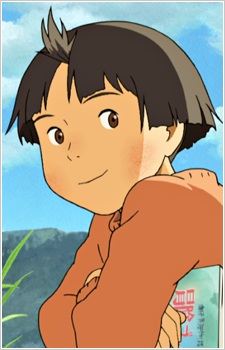
Shinko Aoki

Mayuko Fukuda
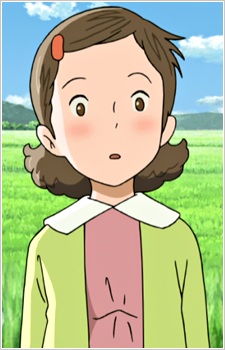
Kiiko Shimatsu

Nako Mizusawa

Nagiko Kiyohara
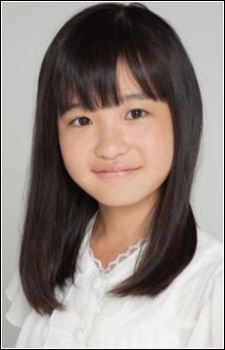
Ei Morisako
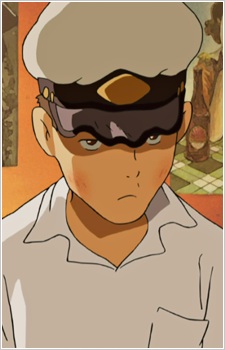
Tatsuyoshi Suzuki

Akimasa Egami
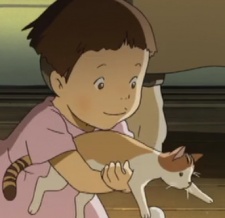
Mitsuko Aoki

Tamaki Matsumoto
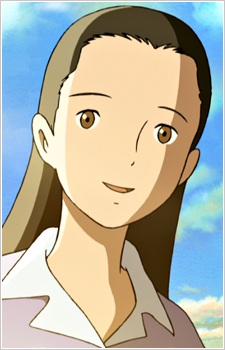
Hizuru-sensei

Miyo Wakita

Hatsue Aoba
Kikuyo Semi
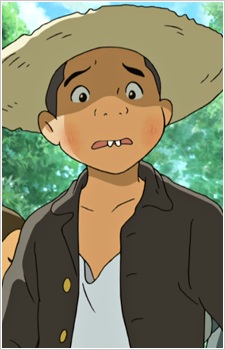
Mitsuru

Nobuhiro Nishihara

Bar California no Onna
Kotone Tachibana
Chifuru
Fuuka Okuda
Oyabun
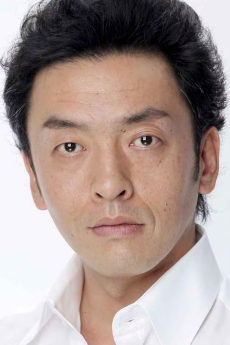
Takaaki Seki
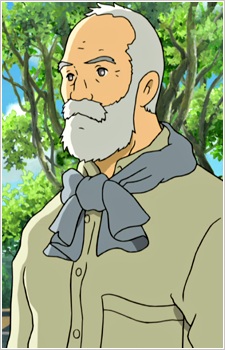
Kotarou Aoki
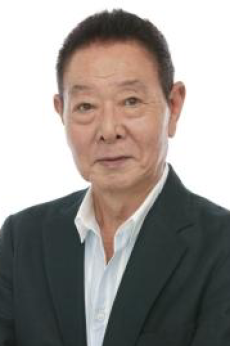
Keiichi Noda
Shirou
Takuya Kaihoko
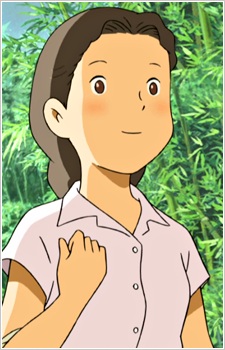
Nagako Aoki

Manami Honjou
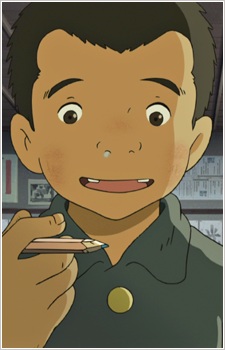
Shigeru
Kazuya Nakajima
Tatara Ken Suoukei

Tsuyoshi Koyama
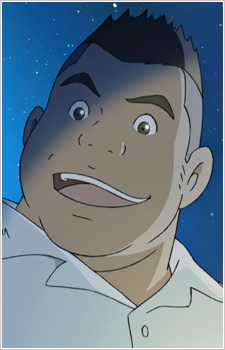
Tousuke Aoki
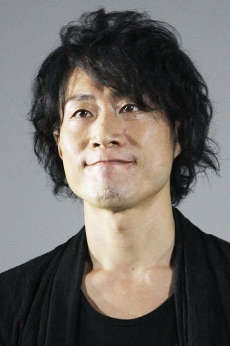
Eiji Takemoto
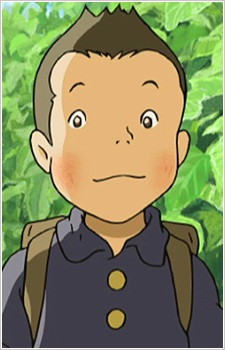
Hitoshi
Satoi Kawakami
Kiiko no Chichi
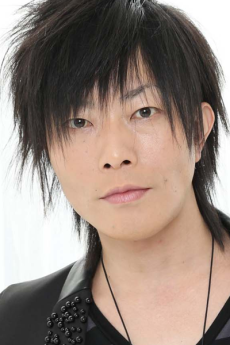
Kishou Taniyama
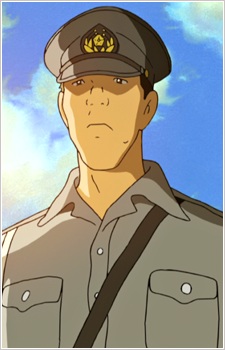
Tatsuyoshi no Chichi
Kaoru Setoguchi
Ippei
Kazato Tomizawa
REVIEWS

SteadyWatcha
A quietly beautiful film about childhood, friendship, and the weight of memory — underseen and worth every minute.Continue on AniListMai Mai Miracle is one of those films that sneaks up on you. It is set in 1955 in rural Yamaguchi Prefecture and follows Shinko, an imaginative, restless third-grader who grew up hearing her grandfather's stories about the ancient history of their small town. A thousand years ago, the same unremarkable patch of countryside was the site of an imperial capital, and Shinko carries this knowledge like a private superpower — the ability to look at a dusty road and see something richer underneath it. When a quiet, withdrawn girl named Kiiko transfers from Tokyo, the two form a friendship that becomes the emotional backbone of the entire film. Woven alongside their present-day adventures is a parallel storyline set a millennium in the past, following a young princess named Nagiko who once lived on the same land. The dual timeline never feels like a gimmick. It functions more as emotional texture — a way of saying that grief and longing and childhood wonder are not modern inventions, that this earth has always held people who felt things deeply.
One of the film's most quietly impressive craft choices involves Kiiko's introduction. In the early scenes, before she and Shinko find each other, the animation uses shadow in a way that is easy to miss but impossible to unfeel once you notice it. Kiiko moves through scenes with darkness falling across her face and figure, as though she is perpetually standing just outside the light. It is not dramatic or heavy-handed — it is subtle enough to read almost as a coincidence of framing. But it accumulates. By the time you consciously register what the film has been doing, it has already worked on you. Kiiko doesn't just seem sad. She seems absent from the world in a way that has a visual grammar to it. When the light eventually reaches her — gradually, through the chaos and warmth of Shinko's friendship — the shift feels genuinely earned rather than scripted.
The friendship between the two girls is handled with remarkable restraint. The film never over-explains Kiiko or rushes toward resolution. It simply lets Shinko's relentless, slightly oblivious warmth do what warmth actually does — not fix things, but make them survivable. These are children helping each other the way children actually do, without grand gestures or articulated epiphanies, through shared goldfish and cave exploration and accidentally consuming Kiiko's father's liqueur chocolates. There is a lightness to the first half of the film that is not naive — it knows exactly what it is doing, building joy with deliberate generosity, because it understands what the second half is going to ask of you.
The story is strong enough that the film's weaknesses become more frustrating than damning. The voice acting for Shinko is the most immediately noticeable stumble. There is an over-performed quality to it — a projected, slightly forced energy where the character needed something messier and more unguarded. Shinko is a girl with enormous inner life, and a voice performance for a character like that needs to sound like it is thinking rather than announcing. The animation has a similar unevenness — there are sequences of genuine beauty where the craft is fully visible, and then cuts that feel rushed, like the budget thinned at exactly the wrong moments. Neither flaw is fatal. But both are real, and they occasionally pull you out of scenes that should be fully immersive.
What the film gets completely right, what no technical unevenness can touch, is its characters. And no character lands harder than Suzuki.
Suzuki is the kind of character that lesser films would flatten into comic relief or a plot device. Instead he becomes something rarer and more painful — a genuinely decent kid who loves someone he cannot help and loses them in a way he will never fully process. His arc is the most heartbreaking in the film. Not Kiiko's grief, as raw as that is. Not the parallel tragedy of Nagiko in the past timeline. Suzuki's — because it is the quietest, and because he faces it with the specific stoicism of a boy who has been taught that bearing things alone is what strength looks like.
His feelings are never stated outright. The film is too smart and too honest for that. It shows them instead in the texture of his attention, in the small ways he positions himself, in the way his face changes in scenes that are otherwise played for lightness. When everything falls apart, Suzuki doesn't collapse visibly. He keeps moving. And somehow that restraint is what makes it devastating — watching someone that young learn to carry something that heavy, without anyone teaching him how, without anyone even fully acknowledging what he has lost. It is the kind of scene that doesn't reach for tears. It simply earns them. It will make you cry before you even understand why.
Knowing that the film is based on Nobuko Takagi's autobiography adds a layer that changes how every scene sits. Shinko is Takagi as a child. Suzuki is a real boy. Kiiko is a real person she loved. Takagi carried all of them long enough to write a book about them decades later — and then became one of Japan's most decorated literary authors, winning the Akutagawa Prize, the country's most prestigious literary recognition. The specificity of what she remembered, the precision of the joy and the grief both, tells you everything about what that summer meant to her. Memory that exact about happiness is its own form of mourning. It explains why the film's lightness has an ache running underneath it that you feel before you can name it.
The parallel Heian storyline earns its place in this context. Shinko's obsession with Nagiko — her insistence on imagining the life of a girl who stood on the same ground a thousand years before — is not escapism. It is a child trying to close a distance that genuinely bothers her. Which is why the fantasy sequences never reach for magic. They feel like a form of love instead.
The film has a series-shaped quality that 95 minutes cannot fully contain. The episodic rhythm of the children's adventures, the way each small arc slowly reveals another layer of the town's social world — it breathes like long-form narrative compressed under pressure. A 12-episode anime adaptation of this material could have been genuinely devastating in the best sense. More time with Kiiko's interiority, more time with Suzuki before the second half arrives, more room to breathe inside a story that clearly has more to give than its running time allows.
Mai Mai Miracle is not a flawless film. The voice acting stumbles, the animation is uneven, and it asks for a patience that not every viewer will give it. But it is a deeply good film, and a criminally underseen one. It will make you cry in a scene you don't see coming, about a boy who never says what he feels, on a patch of earth where someone loved and lost and remembered long enough to write it all down.
A solid 7 out of 10 — and an honest recommendation to anyone willing to slow down and trust it.
SIMILAR ANIMES YOU MAY LIKE
 MOVIE AdventureTonari no Totoro
 MOVIE DramaOmoide Poro Poro
 MOVIE AdventureKappa no Coo to Natsuyasumi
 MOVIE DramaGiovanni no Shima
 MOVIE AdventureKimitachi wa Dou Ikiru ka
 MOVIE AdventureArete-hime
SCORE
- (3.5/5)
MORE INFO
Ended inAugust 15, 2009
Main Studio MADHOUSE
Favorited by 54 Users