
IKOKU NIKKI
STATUS
COMPLETE
EPISODES
13
RELEASE
March 30, 2026
LENGTH
24 min
DESCRIPTION
Reclusive novelist Makio Koudai has always preferred the company of books—but when her sister and brother-in-law pass away, Makio unexpectedly becomes the guardian of her 15-year-old niece, Asa Takumi. As they navigate grief, clashing personalities, and the challenges of living together, the two slowly open their hearts to each other, discovering warmth, understanding, and the meaning of family.
(Source: Crunchyroll)
CAST

Makio Koudai

Miyuki Sawashiro
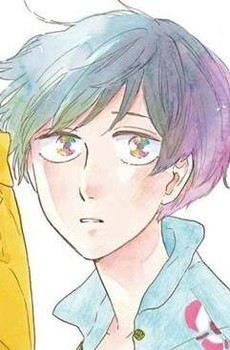
Asa Takumi

Fuuko Mori

Shingo Kasamachi
Junichi Suwabe

Emiri Nara

Sumire Morohoshi

Nana Daigo

Eriko Matsui

Kazunari Touno
Takashi Kondou

Minori Koudai

Sayaka Oohara

Michiko Nara

Mie Sonozaki

Ikki Juno

Kujira

Chiyo Morimoto

Ruriko Aoki

Yumi Kanda

Satomi Kobashi

Kotoko

Hisako Kanemoto

Motsu

Sanae Kobayashi

Mori

Yukako Kiuchi

Yuuto Tougou
Ryuunosuke Watanuki

Hajime Takumi
Takahiro Yoshino

Shouko

Kana Hanazawa

Hattori
Takeru Kikuchi

Misaki Oki

Miki Natsutani
Mocchi
Iori Saeki

Yasuko

Miyuki Satou
Mizuhara

Hisako Toujou

Mochizuki
Naoya Miyase

Emiri no Chichi
Kouhei Kiyasu
Ayaka
Moena Ashida
EPISODES
Dubbed

Not available on crunchyroll
RELATED TO IKOKU NIKKI
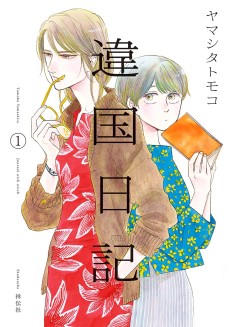 MANGA DramaIkoku Nikki
REVIEWS

ZNote
Grief has no playbook. But finding your answers, or no answers at all, is necessary to move on.Continue on AniList(Video includes audio. Be sure to unmute) It would be easy to point to something like Kübler-Ross’s “The Five Stages of Grief” as being the script through which we experience shocking loss. The problem is that doing so presumes that we as people operate in such a methodical manner. We don’t. Especially since not all losses are created equal, and everyone is just as different as everyone else, there’s a certain extent to which those who grieve (even in the world of fiction) need to be given a degree of latitude. It’s particularly true when loss happens to one’s own family, regardless of whether there were close ties or not. Throw in it being your parents, that it happened in a flash, and that you haven’t even entered high school proper yet, and it’s not simply that “they’re dead.” There’s nothing simple about that. Your life has been violently uprooted, and you find yourself thrust into feelings that you don’t necessarily understand because nothing can properly prepare you for them.
Within Journal with Witch / Ikoku Nikki, Takumi Asa must confront this reality, and initially, it seems like there’s no one who is really going to help her do it. Moving in with her aunt Makio, Asa finds someone who is not only blunt about her own nonfeeling towards her own sister’s passing, but also that it’s unlikely that Makio would ever come to love Asa herself. It’s not all bleak, though. Like the true writer that she is, Makio insists that whatever Asa is feeling concerning her parents’ deaths is hers alone, and that no one has the right to tell her otherwise. Giving Asa a journal in which to record her thoughts, the steps towards personal healing and reconciliation take their root.
What Makio says might sound noble, no doubt, but in terms of providing Asa with some kind of stability, it leaves much to be desired. She is positioned far away from the family both in terms of how she relates to Asa and with her own personal history, which helps orient the anime’s central thesis. Makio seemingly has no positive things to say about her sister, and with the recollections we are privy to seeing, there was a seemingly-insurmountable divide between them. She seems certain of that. Juxtaposing Makio’s detachment from Asa’s own uncertain feelings and confusions, in essence, sets up two people brought together by circumstances and needing to understand each other.


(Makio’s philosophies concerning life, as well as her attitude towards Asa’s mother in particular, provide Asa with no direct answers. Asa therefore must come to her own reconciliations and live into them) Despite often being in a world unto herself (and an untidy world at that, if the state of her room is anything to go by), Makio’s decision to take Asa in proves to be sincerely healing for both characters. By taking on the role of Asa’s caretaker, Makio puts herself in a position where she must care on some level beyond a simple “How are you doing” sentiment. Though perhaps unintentional, it forces her to reconcile that perhaps her own view of her sister isn’t quite as one-dimensional or steady as she so believed. The intertwining of Asa’s memories and experiences, coupled with Makio’s generosity, reopens lines of communication and feelings that were once closed. They’re triggered by even simply being around old family, seeing old possessions, and standing in Asa’s presence. One must imagine how many silent days Makio spent, her only true companion being the tapping away at her keyboard, her family not even passing through her mind. But with Asa there, she’s reminded of what was, and is, every day.
The result is a kind of stream-of-consciousness style of storytelling both of the moment and of the larger narrative through its imagery. Despite being an anime, Ikoku Nikki’s visual language relies more heavily on strong drawings and layouts as opposed to frothing at realism or smoothness on-ones. Transitions from one moment to the next often happen in quick cuts or with contrasting colors and visuals, yet the underlying thread that leads from one thought to another is always coherent. By allowing the anime to “cut to the quick” so to speak, director Ooshiro Miyuki allows a flurry of hazy sensations to fill the screen, letting the emotions clash or harmonize as the moment demands. Shadows and symbols of the past can move freely. Because such moments include both Asa’s feelings and Makio’s feelings, it unites them as people having to deal with their own complexities in their own ways, even if their personal journeys’ starting and ending points happen at different places: native to them, foreign to everyone else.


(The anime’s narrative, along with its editing, operates on something akin to stream-of-consciousness storytelling. Phrases, poses, or situations trigger similar or even-if-only-tangential recollections that reflect moments and feelings as being built up over time) Asa’s own complexities arise from realizing that there are aspects of her own parents that she never truly knew or understood. For as much as we might like to pretend that we understand everything and everyone in our own lives (especially in our teenage years when we’re forced to simultaneously still be children yet become adults, as well as deal with our own emotional hangups), we are still only ourselves. It is not anyone’s fault, but rather is simply the way in which we inhabit the world, and because despite being individuals, there is surprisingly little we have control over. Spending time with Makio and the other adults requires Asa to acknowledge the pluralities of perspectives about her parents, their own relationship to one another, their relationship to her, their relationship to others, and so on. As such, Asa’s own emotional compass swings between lashing out, devastation, feeling adrift, and often at the mercy of other people’s actions. In her search for answers, she’s desperate to find some kind of stability, some kind of solid ground to place her footing and begin putting her life back together again, whatever that may have looked like. It’s not a teenager throwing a fit: it’s a teenager not even being sure how she’s supposed to cry for help since she can’t make heads or tails of her own self.
But the adults in her life, by choice or because they simply don’t know how, can’t provide her with the answers she wants. Ikoku Nikki’s strength lies in how it does not provide neat little boxes wrapped with bows, that it respects the individuality of its characters to live by their own convictions and philosophies, even if they fly in the face of one another. Asa confronts the duality of standing out vs. not wanting to stand out / feeling uneasy about that conundrum, while Kasamachi deals with his own relationship with his father and how it too greatly affected him. Asa’s mother made a bid to be normal, and her father certainly made little effort to make his presence known spiritually or emotionally. In that sense, Asa’s journal writing itself moves without direction because she doesn’t know which direction she’s supposed to move in with all that she’s been told or given. It’s only when she starts the process of greater self-actualization that she finds not only a purpose for her journal in terms of hobbies (Makio’s rich vocabulary gives her plenty of material), but also in deciding something truly for herself.


(Asa is consistently denied easy answers from the adult cast, in-part because there are no easy answers to Asa’s frustrations, and because they themselves move through life according to their own histories and philosophies. It supports the theme of Asa needing to find her own way through her feelings, including all the conflicting information) Asa is not the only young person in the story who needs to make decisions. Sprinkled throughout Ikoku Nikki are pockets of other grief stories, though their gravity is ultimately less than the overarching question of Asa’s parents’ deaths. At first flush, these moments appear to come out of nowhere, and it’s easy to dismiss them as lazy storytelling or injections of melodrama. Why should we be concerned with characters like Chiyo and her freakout over the medical school she applied to, or Yoshimura’s treatment on the baseball team? Like Takopii’s Original Sin, the point is not to emphasize a “who had it worse” question and play a comparison game, but rather to illustrate that Chiyo and Yoshimura, like Asa and even Emiri, all have their own griefs or loneliness hanging over their shoulders. Things they love being ruined or opportunities taken from them through forces seemingly beyond their control show that grief is not a passive phenomenon, no matter who it impacts. Those impacts have outward reverberations, even if only when glimpsed for a moment. Ikoku Nikki’s empathy lies not in the small and large tragedies that befall them, but rather in recognizing the powerlessness that grief, malaise, or mourning brings. When that powerlessness comes from others, no matter how fleetingly we may have glimpsed it ourselves, the only way to respond is in our own way, even if it’s more declamatory or visceral than others. And yes, it may include deciding to talk to the people you once did a little bit less about certain things because they can’t take a hint.
Even Makio, with her supposed certainty about her feelings concerning Asa’s mother, feels powerless to either love Asa in the way we expect familial love to be, or in how she tries to explain herself. But at the end of the day, she chose to take Asa in, because having something is better than being left on your own with nothing. Being powerless doesn’t mean being alone. Asa’s moving through herself and glimpsing all these expressions of grief, subtle and unsubtle, brief or longstanding, fellow teenager or friendly adult, implies a grand synthesis of how we take in our own experiences and forge a new self through grief. In that sense, Asa is never alone because she has taken on so much from her parents’ deaths and through existing in the here-and-now. It is the ultimate non-answer, the kind of sentiment that would make its home on my grandmother’s old crocheted pillow, but doesn’t carry meaning on its own. Saying it feels insincere compared to the actual experiencing of it.

Ikoku Nikki doesn’t claim that everything will be perfectly fine and dandy with grief and mourning, regardless of how much time has passed. Grief is not something that only gets put in a book that gathers dust and is eventually forgotten as time moves forward. It’s always present, finding ways to peek into our lives in either passing moments or deeper contemplations. Yet it’s because it’s always present that we must learn to internalize and accept its presence. We will change because of it, and that’s okay. Asa didn’t need “fixing” so much as needing to accept her own feelings, including all the contradictions, convictions, and condescension therein. She’ll never truly grasp the full portrait of her parents, nor how their deaths impacted her or Makio, or the others whose lives were changed as a result. But so long as Asa, and they, takes lessons both from the living and the dead, they’ll be one step closer to the best version of themselves, realizing that it’s less about the answers and more about the steps we make and the breaths we take. For Asa, she’ll draw in her breath and sing her first notes.
As long as she does her best, what a lovely song it will be.
RIP Grandma Milly – I’m so grateful that I could be with you until the very end. I love you and miss you <3 
Scheveningen
A compelling and grounded narrative exploring grief, memory, and the complicated relationship people have with familyContinue on AniListIkoku Nikki is a compelling and introspective story that examines how its characters deal with grief and the nature of family relationships. The premise of following a teenager who has just lost their parents inherently lends itself to weighty and meaningful themes, exploring how they and their new parental figure respond to death while adapting to a new familial structure. Although it is a clear natural advantage in getting viewers invested given the self-evident substance and emotional intensity of the subject, Ikoku Nikki quickly proves it is not just using the gravity of its scenario as an emotional crutch, having the writing and thematic depth to earn its serious airs. Stories in this vein still often run the risk of belabouring their point since grief is often simple to explain when broken down into raw logic but paradoxically difficult to convey as an emotional experience, leading to potentially repetitive and stagnant characterisation. Ikoku Nikki having its adult characters being equally important perspectives does much to alleviate this since it breaks up the often brooding and emotionally stunted teenaged perspective. This gives the narrative a more distant voice to comment on Asa’s teenaged experience without it feeling too on the nose, while also exploring the response of adults like Makio being unexpectedly thrust into the role of a parental figure. Ikoku Nikki takes this proven story dynamic a step further, adding further depth by having the adult characters reflect on their own relationship with their parents as well to contrast it with Asa’s situation. All this is brought together by voice acting and writing that is distinctly naturalistic, forgoing much of the usual anime-style intonation for something rougher and closer to reality, giving the show a grounded and genuine tone. Its strong core themes and control over tone then allows the narrative to effectively tackle adjacent ideas like exploring the nature of memory, or how Asa’s circumstance intersects with otherwise normal teenaged struggles. This does spread the narrative a bit thin at times with its structure altered from a serialised manga into a season long anime, leaving most of Asa’s peers in school underdeveloped relative to the adult characters. Despite that, Ikoku Nikki’s core is still outstanding with its themes around grief and family being some of the most compelling in the medium.
The opening episodes of Ikoku Nikki can feel a bit isolated, or even claustrophobic at first, squarely focusing on Asa and Makio’s new status quo and the foundation of their relationship. Set predominantly in Makio’s apartment with few named characters aside from Asa and herself, it leaves a distinct feeling of being smothering yet dislodged at the same time. While this discomfort was certainly by design and appropriately reflects the tone of the situation, it does make for slightly difficult initial pacing. The cast and scope of the show does gradually expand, breaking up these intense but quiet moments with Makio and Asa through the introduction of livelier characters like Daigo and a wider variety of environments with Asa’s return to school. Prior to that, the show begins to employ the visualization of the character’s imaginations as a way to add variation to the conversations taking place in Makio’s apartment. It is undoubtedly effective symbolism, creating strong motifs like Asa’s experience represented as being lost in the desert. This goes beyond just being a one-off colourful metaphor and is used consistently throughout the series with Asa later imaging her peers who appear to have it emotionally easier than her as riding in a caravan of camels while she stumbles in the sand. The imagery extends even as far as Makio, who likens her being alone by choice to being in an oasis in the desert, which forms an effective contrast between the two of them while still highlighting how they are sharing the same metaphorical space of the desert. Although the symbolism of the imagery is well conceived, it is also no particularly striking moments when they are employed, lacking an ethereal or visceral quality to truly drive home the idea that the audience is peering into their emotional state on a much deeper level than just observing the characters in normal reality would allow. This is likely down to the colour palette and sound design of Asa’s imagination not being noticeably different from scenes meant to depict reality, leaving it feeling a little flat as a contrast. While still conceptually strong, the visualization and symbolism of these moments unfortunately not as effective as they could be to add that final flourish to the emotional punch of the writing and voice acting.
What has been exceptionally strong, and rare for an anime, is how Ikoku Nikki uses more naturalistic voice acting to give the characters and their lives a strong sense of realism. The adult characters, particularly Makio, do still deliver most of their lines in a more polished and coherent manner than you would find in a majority of real-life conversation. However, this is generally kept to a level conducive for effective storytelling instead of something suave that consistently enters the territory of heightened reality. The speech pattern of the adults all sharply contrast with the teenaged cast, who for once speak like teenagers, foregoing much of the anime-style dialogue that tends to play up charm or cuteness. There is a distinct youthfulness and immaturity to the way Asa’s peers all speak to each other, frequently using choppier, informal speech patterns with distinctly facetious tones, even when compared to more relaxed adult characters like Daigo. Instead of being unrealistically endearing, or moe, for a lack of a more precise technical term, they can often come off as inane, petulant, or even insufferable at times, which is an accurate reflection of teenagers in reality, especially when juxtaposed to adults. This does mean that the characters in Ikoku Nikki will likely never garner the same levels of attachment as those in other shows, but it lends the narrative and its themes a much greater sense of groundedness and sincerity. Although it might sound banal when spelt out so plainly, Ikoku Nikki’s characters are convincing representations of people instead of feeling like they were manufactured to fit squarely into an archetype, something far easier to set as a benchmark for fiction than it is to actually achieve.
This sincere and real quality of its writing and voice acting is particularly important for Asa’s characterisation since the narrative has her show her more raw and petulant side. It is entirely appropriate given the situation she is placed in and allows the show to have heavy scenes without them veering into melodrama, or getting emotionally defanged by having her behaviour reduced to a very anime-style endearing brattiness that sands down her rough edges. Ikoku Nikki is comfortable with the viewer being keenly aware of moments where Asa is being unlikeable, sometimes acting out past the point people can overlook out of sympathy. It trusts the viewer to keep in mind all the other information and scenes they have been shown of Asa and for it to temper their feelings and judgement. While this sounds again like stating the obvious when laid out so plainly, this kind of confidence in the viewer’s emotional intelligence and memory is unfortunately not particularly common. More importantly, Ikoku Nikki hits the right balance between having Asa’s behaviour be abrasive enough to be of note to the viewer and draw out an emotional response, but not so overwhelming where it becomes unbearable to watch or takes them out of the scene. It is at a level that feels convincingly raw, aligns with and further builds up Asa’s character and psyche, while also giving the viewer enough room to digest and consider the themes of the scene instead of overwhelming them with the sheer displays of emotion like some dramas often end up doing. There is a clear reflection of a real human experience in Asa’s character, with all the complications, irrationality, and contradictions that often entails.
The excellent characterisation and voice performances is essential to how Ikoku Nikki manages to examine the complicated ways characters respond to grief. This is most evident with Asa, who oscillates between subdued melancholy, catatonic exhaustion, a veneer of functional normalcy, to even distrust and anger over the loss of her parents. The show accepts that its narrative will have to at times double back on itself or meander in order to authentically capture the process of grieving, as opposed to tackling grief in more organised stages with only minimal backsliding. There is a distinct forward motion to Asa’s emotional state, but it is allowed to build up over time with her different feelings and responses constantly alternating between simmering in the background while others receive more focus in the moment. Crucially, Ikoku Nikki resists the temptation to have moments of absolute resolution, which is often the go to approach in storytelling in order to create a conventionally satisfying narrative structure. Even when important moments of catharsis are achieved, such as Asa finally reaching the stage where the reality of her parents being truly gone forever finally hits home, it is not later reduced to some clean break where Asa’s character and themes then moves on to being only minimally burdened by that aspect of grief. This messiness and dwelling on certain ideas strikes the right balance between feeling visceral and genuine without being so messy that it becomes incoherent or an unsatisfying as a narrative.
This approach of dwelling upon a character’s very inwardly oriented emotions and behaviour does always run the risk of belabouring its point. If viewed solely in terms of a thematic conclusions instead of observing the process of grief, it is relatively easy to intuit the reasons for Asa’s behaviour quite early and spell them out in a very dry and dispassionate manner. Shows, to an extent, have to simply trust a viewer will resist this urge and understand that observing the emotional experience is just as important to fiction as the eventual conclusion it is making. But the story also needs to do its part in breaking up these emotionally intense scenes to prevent it becoming overbearing or trite. Ikoku Nikki does this by having Makio’s adult perspective share equal narrative time with Asa’s. Not only does it give the viewer some respite, but it allows the story to help with the digestion of emotionally heavy scenes by having Makio reflect on them in a more even keeled and mature manner. It also provides an inherently strong contrast in how people with different personalities and levels of maturity respond, with Makio taking a much more detached and utilitarian approach to handling the fall out from her sister’s death. However, the show also avoids having Asa and Makio simply being two sides of the same coin, which could have create a feeling artificiality, even if it is an efficient way to convey the story’s themes. Makio and Asa are not exact parallels of each other, and the show is keenly aware of the different relationship Makio had with her sister and highlights how her feelings cannot be simply described as more subdued grief. In sacrificing its ability to more directly explore a more introverted character’s response to loss, it maintains Makio and Asa as fully realised characters with their own particular responses to the situation, even if it makes for a less clear comparison in some areas.
Asa and Makio’s different characters then lend themselves to examining relationships between family members. The most obvious avenue for this is Asa being prompted to reconsider how she views her parents and how much she really knew about them now that they are gone. Alternating to Makio’s perspective not only serves as a way to add variety into otherwise very introspective scenes, but also buttresses the themes around memory and familial relationships with her own questions about how much she really knew her sister, especially after she gave birth to Asa. Ikoku Nikki builds on this with Makio and other adult characters like Shingo also reflecting on their own relationship with their parents to give a more mature perspective that has had more time to develop. Most similar narratives tend to explore the parent and child relationship with characters representing only a single direction in it, with someone in Makio’s position solely exploring the themes of learning how to grow into a parental figure. At most, a conventional story would have the reflections of the adult character shape the way they handle the relationship with their own child differently instead of fully acknowledging that Makio is also still someone’s child, even if they are in their thirties. All the adult characters in Ikoku Nikki reflecting on the relationships with their parents not only adds depth to themselves, but contributes thematically by reflecting Asa’s own struggle as well and highlight how familial relationships is not something that simply ends or loses its relevance simply by reaching a certain age.
This primary focus on examining grief and the nature of family allows Ikoku Nikki to also touch upon a lot of adjacent topics by essentially adding a layer of inner turmoil to complicate the more ubiquitous challenges faced teenagers and working adults. These supporting themes benefit from the serious and grounded tone set by the core family drama, preventing a lot of common plot points like exploring messy relationships between adults or the teenaged struggle to fit in and find themselves from feeling trite. While a good examination of these ideas in their own right, particularly in exploring Makio's experience as a creative, they also tie back to supporting its central themes, such as Asa’s struggles around feeling the need to conform to the expectations placed on her at school paralleling the unease she feels about believing she is expected to remember her mother a certain way. These ancillary themes also retain a strong sense of realism the whole series benefits from, making the points they explore more convincing in how they culminate in moments of growth or change that are far less dramatic or saccharine compared to what might be found in a more conventional story about high school.
This does come at the cost of some of the supporting cast members that serve as conduits for these themes feeling underserved, particularly among the teenaged characters. Only the arcs of Emiri, and to a far lesser extent Yoshimura, the baseball guy, feel like they have adequate set up. And in the case of Yoshimura, that is merely in the technical sense of his conflict being established early and brought up intermittently as the season went on. While primarily due to most of the secondary cast not having much presence in the story, it is Asa’s peers in school that feel particularly detached from the main narrative because of how little they interact with her. It does serve to highlight Asa’s isolation with Emiri being her only significant friendship among her peers, but it also precludes much audience investment in the teenaged secondary cast. To be certain, their story arcs and themes they explore do parallel and accentuate the exploration of Asa’s own struggles, but they often feel distinctly like addendums or tangents rather than a seamless part of the story like many members of the adult cast are. This might be down Ikoku Nikki being shaped into a season of anime instead of its original form as a running serial, leading to a lot of the teenaged characters feeling like they only have relevance in the final hour of the season. But in the end, it is still a minor point and more than compensated by the interesting themes yielded from their stories.
Overall, Ikoku Nikki is certainly a compelling work, achieving a sense of realism that helps a lot of its observations and thematic conclusions ring true in reflecting parts of the human condition, particularly with grief and how complicated relationships can be. Although the visual elements supporting this are not as striking as they could be, and some members of the secondary cast feel underserved and a little disjointed, the exceedingly strong writing and voice acting performance more than makes up for that and let the narrative shine. The show is distinctly closer in tone to a literary work in how it forgoes much of the usual anime exaggeration, reserving it for only light-hearted moments or imagination while keeping its primary perspective grounded and serious. It achieves the rare feat outside of literary works in its characters being convincing as complicated individuals in their own right instead of falling into tropey archetypes or existing for a blatant narrative purpose more than anything. With that, Ikoku Nikki is a strong 9 out of 10, highly compelling but just a bit short in its presentation, but could certainly be a 10 if its themes particularly resonated with a viewer.

Mcsuper
Navigating life and loneliness is like looking for answers in a desert - find your own oasis.Continue on AniList
The power of human understanding is profound, but how much do humans truly understand other people? We can try to shed light on someone else’s heart through communication, but what happens when that light is too bright for someone else? They will look away. Ikoku Nikki is about a lot of things: grief, loneliness, communication, and finding solace and healing.
Ikoku Nikki takes the delicate subject of grief and tells us that emotions are not linear, but rather, something that does not arrive as one wills it to. Elisabeth Kübler-Ross, in her 1969 book, On Death and Dying, introduced the five stages of grief model, which includes denial, anger, bargaining, depression, and acceptance. While this model is widely used to describe human emotions, reality suggests that everyone follows a different path. Asa experienced this early in her life, as her parents were killed in a car crash when she was a teenager. As Makio, the sister of Asa’s mother, took Asa into her home and became her legal guardian, one of the first things she said was:
My place is never clean. And I’m usually in a bad mood. I can’t even guarantee that I love you. But I’ll promise you this. I will never trample on your feelings. If you can accept that, come stay with me tomorrow, the next day, and every day after that!
With eyes like a wolf… she saved me from my loneliness.
One of Makio’s main values is that everyone is entitled to feel, and no one can get in the way of one's own emotions. She taught Asa about that early on in their cohabitation. As a writer who writes books for young people, a strong understanding of how young people feel might have been in Makio’s arsenal, but she never forced her opinions on Asa. While Makio might be a bit of a reclusive author and not a professional in the social aspects of life, her entry into Asa’s life, and vice versa, might have been the best thing to happen to both of them, given the circumstances. Makio does not have the answers for Asa, but she suggests that Asa write her thoughts in a journal, which fits Makio's own personality as a writer.
Time and time again, Asa tried to navigate her new reality of loneliness. She wondered why she did not cry at her parents’ funeral, which is a “natural” reaction to the death of a loved one. To that, Makio told her that she’d cry when she felt sad. Society usually tends to put people into boxes and expects certain things to happen. Makio took Asa away from the prying eyes of society, and so, Asa questioned why she did not act in the performative way society expected to see.
I was very impressed with the visual storytelling at play in this anime. The production is by no means lavish, but the anime makes the most out of limited production with apt metaphors. The most prominent one was depicting Asa’s loneliness as a desert. It represents her feeling isolated and lost, even when surrounded by other people, as she tries to process her grief. Her feeling of emptiness is represented using the vast expanse of an empty desert landscape, so much so that the lines in her journal become the lines of trodden sand. There are also times when the world around Asa just dissolves into the desert sand, which is a good sense of visual contrast that subtly tells the viewer how Asa was feeling at the moment.
(The desert represents Asa's loneliness, but as she finds out through the course of the story, through her interactions with her newfound family in Makio, and new acquaintances, she slowly regains charge of her own life, confronting loneliness head-on.) Although Asa’s grieving process may be the main hook of the story, Makio also gets her own focus within the story, and I resonate with her character a lot. While Asa struggles with loneliness, Makio thrives with loneliness. As somewhat of a reclusive author, she works a lot in the waning hours of the night, with a lot of her work done in solitude. Imagine this - I am sure many of us have written long pieces of writing, whether it be for school or for work. Cramming to meet a deadline and writing in the middle of the night is something that I am sure many students have experienced. More or less, this is the life that Makio consistently lives, and she clearly enjoys this solitary feeling of writing to be able to do it for so long. As such, her social skills are not her strong suit. I, myself, am much the same, because I also love writing. I am not a professional author, nor do I plan to be at the moment, but my passion for writing has not faltered. I, too, love writing in the middle of the night, because it is in utter silence where thoughts come to my head. Heck, even some of this review was written in those quiet nighttime hours.
Just like you can't understand the suffocation that I feel, I can't understand your loneliness. Because you and I are two different people.
Makio does not “get” Asa’s loneliness, but I am sure she empathizes in a way. Makio’s loneliness is a choice, while Asa’s loneliness is due to a loss. Asa was desperately looking for water in the desert to quench her own thirst, looking for a motherly guide in Makio. Is it true that when two lonely people meet, it can solve the loneliness of both parties? Not necessarily, but the two people can support each other. The thing that Makio constantly hammered into Asa’s brain was not to put too much stock in what other people say. This value was likely shaped by how Makio’s sister talked down to her on a regular basis and how she criticized her body of work. Makio eventually came to resent her sister, but she did not let her words affect her too greatly. She was able to guide Asa just a little bit, so that Asa’s life is her own, and no one can tell her otherwise. How one decides to live is their prerogative.
One pitfall of shows like this is being overly melodramatic. Ikoku Nikki is not a show that has the characters crying or having loud outbursts often. Rather, it deals with sensitive subjects in a more nuanced way and focuses more on communication and human connection. Sure, in Episode 8, there is a very touching moment of realization for Asa, but it is a moment that feels cathartic rather than outright sad. If you have not watched the show yet, do not expect it to be a conventional tearjerker, because that is not the show’s identity at all.
Kensuke Ushio is becoming one of my favourite anime composers, if not my favourite. His minimalist piano and electronic music soothes the soul, and his usage of field recordings makes his soundtracks feel more emotive and atmospheric. He has a way of making music that fits each scene with perfection. I will admit his soundtrack for this anime is not as memorable as some of his other soundtracks, such as for A Silent Voice or Liz and the Blue Bird, but you can always count on him to elevate an anime adaptation.
If there is one shortcoming of this adaptation, it would be the pacing. There are moments that feel a bit sudden, such as Asa’s junior high graduation, which I felt was not properly built up. Currently, the anime is adapting about two to three manga chapters per episode, and for an anime that focuses on character moments as much as this one, I feel the pacing could have been a bit slower, so we could really explore the characters with a bit more depth.
This was a very impressive directorial debut from Miyuki Ooshiro, as she made use of limited production to direct something quite special. She had a good amount of experience under her belt, with her work on Natsume’s Book of Friends, which is a show that tackles emotional subjects as well, although not nearly as dramatically.
It is not often that we come across an anime like this, and it is one that resonates with me deeply. If you are someone who has lost a loved one or felt the weight of social expectations, it may resonate with you, too. If you are not, maybe you will enjoy the slow-burning story of people navigating their lives and finding their own answers. It is not perfect, but it deals with grief, loneliness and the power of communication quite tactfully. Asa coming to terms with the death of her parents was a touching process with a strong realization, and Makio, thrust into the role of a parental figure, was an interesting development in her life, given her struggles in daily, conventional life. Both of them try to find their own answers in life, and it certainly is not an easy thing. When they find some, it might be the best feeling in the world. In tough times, the world may seem empty like a desert, but finding your own oasis is what it is all about.
If I keep giving water to my own loneliness, could a flower bloom in the dead of night?
I heard Makio wanted some Justin Bieber. Well, have I got the perfect song for her! (Credit to [Triple-Q](https://www.youtube.com/@Triple-Q))
SIMILAR ANIMES YOU MAY LIKE
 ANIME ComedySkip to Loafer
 ANIME Drama3-gatsu no Lion
 ANIME Slice of LifeUsagi Drop
 ANIME DramaAkage no Anne
 ANIME DramaAnne Shirley
 ANIME ComedyAme to Kimi to
 ANIME ComedyKuragehime




SCORE
- (4.35/5)
TRAILER
MORE INFO
Ended inMarch 30, 2026
Main Studio Shuka
Trending Level 14
Favorited by 2,327 Users
Hashtag #違国日記